Knowledge Hub

Learn about QA trends, testing strategies, and product improvements — with insights designed to help teams stay ahead of industry changes.

Ah. Nothing to see here… yet

It may be coming soon, but for now, try refining your search

Thank you! Your submission has been received!
Oops! Something went wrong while submitting the form.
Testing guide

Enterprise Software Testing: A Guide to Quality at Scale

Testing a simple app is very different from testing software that runs a billion-dollar supply chain across 50 countries. Along with catching bugs, enterprise software testing protects revenue and safeguards compliance with the confidence that tens of thousands of employees can start their week without disruption. Enterprise testing is different from other scales of testing because the stakes are higher. A missed edge in a retail system during Black Friday can mean millions in lost sales. This blog will discuss enterprise software testing in detail, including why it matters and how to build a robust strategy.

February 3, 2026

8

min

Introdaction

Testing a simple app is very different from testing software that runs a billion-dollar supply chain across 50 countries. Along with catching bugs, enterprise software testing protects revenue and safeguards compliance with the confidence that tens of thousands of employees can start their week without disruption. Enterprise testing is different from other scales of testing because the stakes are higher. A missed edge in a retail system during Black Friday can mean millions in lost sales. This blog will discuss enterprise software testing in detail, including why it matters and how to build a robust strategy. 

What Is Enterprise Software Testing?

Enterprise software testing focuses on validating large, interconnected systems that support critical business operations across teams, regions, and technologies. These systems are rarely standalone. They integrate with ERPs, CRMs, third-party services, internal tools, and legacy platforms that all need to work together without breaking.

Testing at this level goes beyond checking individual features and looks at how workflows behave end-to-end, under real-world conditions and real-world load. It also involves multiple departments, from engineering and QA to security, compliance, operations, and business stakeholders. The goal is simple but demanding: making sure that the complex systems remain reliable, secure, and predictable as they scale and evolve.

Why Enterprise Software Testing Is More Complex Than Traditional Testing

According to a 2022 CISQ report, poor software quality costs the U.S. economy an estimated $2.41 trillion, driven by cyberattacks, technical debt, and failures in complex enterprise systems. 

Enterprise environments operate at a scale that most traditional testing approaches are not built for. Systems have to handle large volumes of data, hundreds of concurrent users, and constant activity across different regions and time zones. Integrations add another layer of risk, since a single bug in one system can quietly break workflows in several others. 

On top of that, enterprises often work with strict compliance and security requirements, where even small mistakes can lead to legal or financial consequences. To keep up, testing has to move beyond basic feature checks and adapt to the reality of complex, always-on systems that cannot afford surprises.

Core Components of an Enterprise Software Testing Strategy

An effective enterprise testing strategy needs structure, but it also has to leave room for change. Large systems evolve constantly, so testing cannot be rigid or locked into a single way of working. The best strategies balance clear ownership and processes with the flexibility to adapt as systems, priorities, and risks shift. 

Test Planning and Governance

Test planning at the enterprise level is about alignment as much as it is about coverage. Teams need a shared understanding of what's being tested, why it matters, and who is responsible for each part of the process. Governance helps set standards without slowing teams down, ensuring consistency across projects while still allowing teams to work in ways that fit their delivery model. When done well, it reduces confusion and prevents critical gaps from slipping through.

Test Environment Management

Enterprise systems rarely run in a single, clean environment. There are multiple environments to manage development, staging, pre-production, and production setups, each with its own constraints. Keeping these environments stable and available is a constant challenge. Without proper environment management, even well-designed tests can produce misleading results.

Data Management and Security Validation

Testing enterprise software means working with large volumes of sensitive data. Test data needs to be realistic enough so that real issues can surface, while being protected and compliant with privacy regulations. Security validation is closely tied to this, ensuring that access controls, data handling, and system behavior hold up under real-world conditions. Small oversights in this area can turn into serious risks very quickly.

Cross-System and Integration Testing

Most enterprise issues don’t come from one system failing on its own. They show up where systems connect. Integration testing looks at how data and actions move between services, platforms, and third-party tools in real use. It surfaces problems that only appear once everything is working together, often under load or at scale. Without this kind of testing, small defects can break workflows and erode confidence in the system.

Risk-Based Testing and Prioritization

In enterprise environments, it’s rarely possible, or useful, to test everything equally. Risk-based testing helps teams focus on the areas where failure would have the biggest impact. This means prioritizing critical workflows, high-traffic features, and systems tied directly to revenue or compliance. By aligning testing effort with business risk, teams make better use of time and prevent spreading their effort too thin.

Types of Testing Commonly Used in Enterprise Software

Enterprise teams don’t rely on just one type of testing because no single approach can catch everything that might go wrong in a complex system. Multiple layers of validation are required; each one is designed to detect different problems before they hit production. It’s less about picking the best testing method and more about using the right combination to cover your bases.

  • Functional testing: Functional testing checks that features behave as expected based on requirements and business rules. It helps teams confirm that main workflows work correctly before changes move further down the pipeline. In enterprise systems, this often covers a wide range of scenarios across roles, permissions, and regions.
  • Integration testing: Integration testing focuses on how different systems communicate with each other. It validates data flow, handoffs, and dependencies between internal services and third-party tools. This is where many enterprise issues surface, especially when systems evolve independently.
  • Performance and load testing: Performance testing measures how systems behave under expected and peak usage. It helps teams identify bottlenecks before they show up in production, particularly during high-traffic periods. For enterprise software, this testing is essential to avoid slowdowns or outages at scale. 
  • User acceptance testing (UAT): UAT involves real users validating that the system supports their day-to-day work. It provides a final check that changes make sense from a business as well as a technical perspective. This step helps catch usability or process gaps that automated tests often miss.

Manual vs Automated Testing in Enterprise Environments

Enterprise teams rely on both manual and automated testing because each serves a different purpose. Automated tests are best for repetitive checks, regression coverage, and validating main workflows that run frequently across environments. 

Manual testing, on the other hand, is still important for exploratory work, edge cases, and scenarios where human judgment matters. 

In large systems, not everything can be automated. The challenge is finding the right balance, using automation to save time while keeping manual testing where it adds the most value. 

How to Build a Scalable Enterprise Software Testing Strategy

A scalable testing strategy doesn’t only include writing more tests, but it is also about building a system that keeps up as the business grows. Enterprise teams need an approach that is repeatable, easy to adapt, and tied directly to the needs of the organization. 

Align Testing With Business Objectives

Testing works best when it’s aligned with business impact, and not just technical coverage. That means understanding the systems that drive revenue, the systems that support compliance, and which failure would actually hurt the business. Not every feature carries the same risk, and they do not require the same amount of testing effort. When teams focus their testing efforts where they are most needed, testing becomes a strategic tool instead of a box that needs to be checked.

Standardize Processes Without Killing Flexibility

Standards are necessary at scale, but too much rigidity can slow teams down. The goal is to create shared processes that provide consistency without forcing everyone into the same workflow. Different teams often have different needs. A good testing strategy leaves room for teams to adapt while still maintaining a common baseline.

Integrate Testing Into CI/CD Pipelines

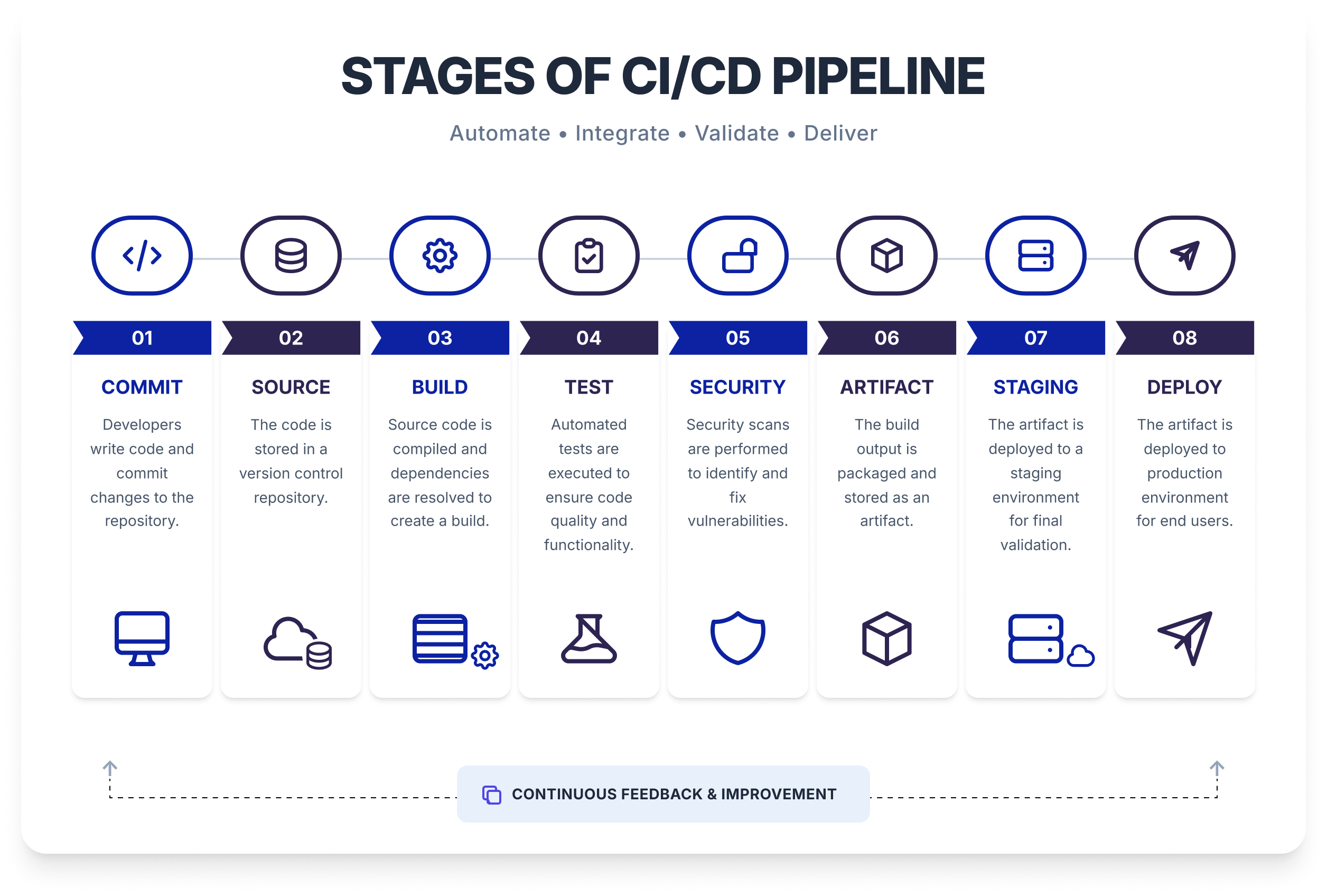
In enterprise environments, testing is not something that happens at the end. It needs to run as a part of everyday development, alongside builds and deployment. Integrating tests into CI/CD pipelines helps catch issues earlier, when they’re easier and cheaper to fix.

Measure Success With the Right Metrics

Metrics should give a clear insight into testing instead of just filling a dashboard. Rather than looking at pass rates and test counts, teams should look at indicators like defect trends, release stability, and time to detect issues. The right metrics make it clear whether testing is actually reducing risks. If the numbers don’t lead to better decisions, they are probably not the right ones. 

Common Challenges in Enterprise Software Testing (and How to Overcome Them)

Enterprise testing comes with problems that don’t usually show up in smaller teams. As systems grow, so does the number of tools, processes, and people involved, and that is where things start to get messy. The key is to recognize these issues early and deal with them right away.

Tool Sprawl and Fragmented Test Assets

Over time, enterprise teams tend to accumulate tools for every stage of testing. Test cases live in one place, results in another, and documentation somewhere else entirely. This fragmentation makes it hard to understand what’s actually covered and what’s falling through the cracks. Consolidating test assets and reducing unnecessary tools helps teams regain clarity and control.

Slow Release Cycles

When testing becomes a bottleneck, releases slow down. Long test cycles, heavy manual work, and late-stage testing can push timelines out further. The fix usually isn’t testing less, but testing earlier and more consistently. Shifting testing closer to development helps teams catch issues before they cause release delays.

Limited Visibility for Stakeholders

In large organizations, stakeholders often struggle to see the real state of quality. Test results exist, but they’re buried in reports or spread across tools. This lack of visibility leads to last-minute surprises and uncomfortable conversations right before launch. Clear reporting and shared dashboards make it easier for everyone to stay aligned without chasing updates.

Scaling Testing Across Distributed Teams

Enterprise teams are often spread across locations, time zones, and even continents. Without shared standards and clear communication, testing efforts can become inconsistent. Teams end up duplicating work or testing the same things in different ways. Establishing best practices and keeping test knowledge centralized makes it much easier to scale without losing quality.

How TestFiesta Supports Flexible Enterprise Software Testing at Scale

Enterprise testing breaks down when tools force teams into fixed workflows or start slowing down as data grows. TestFiesta is designed to handle scale without adding friction, helping teams stay organized while still working the way they need to.

Performance That Holds Up at Scale

As test suites grow, many tools start to feel heavy and unresponsive. TestFiesta is built to handle large volumes of test cases and execution data without slowing down day-to-day work. Teams don't need to archive aggressively or clean up data just to keep the tool usable. This makes it easier to scale testing over time without constantly worrying about performance.

Team Management for Large, Distributed QA Groups

Enterprise QA often involves multiple teams, projects, and permission levels. TestFiesta supports role-based access at both organization and project levels, so teams can control who can create, edit, or manage tests without workarounds. Centralized administration for shared steps, templates, tags, and custom fields helps maintain consistency while still giving teams flexibility.

Faster Test Creation With Built-In AI Support

Writing and maintaining test cases takes time, especially in fast release cycles. TestFiesta's AI copilot helps teams create and update tests more quickly without changing how they work. It supports the full test lifecycle, making it easier to keep smoke, functional, and regression tests up to date as the product evolves. 

Flexible Structure Without Losing Control

Enterprise teams rarely organize tests the same way. TestFiesta allows teams to use tags, shared steps, configurations, and custom fields to organize tests based on what matters to them. This flexibility makes it easier to support different workflows across teams without creating chaos or duplication.

Built to Fit Modern Delivery Pipelines

As testing becomes more closely tied to CI/CD, tools need to keep up. TestFiesta supports automation-first workflows and integrates into modern pipelines, allowing teams to run, track, and review test results as part of regular delivery. This keeps testing connected to development rather than treated as a separate process. 

Conclusion

Enterprise software testing carries real weight. When systems support thousands of users, complex workflows, and critical business operations, there's very little room for error. Quality at this level depends on a clear strategy, smart prioritization, and tools that can grow with the organization instead of slowing it down. TestFiesta supports that reality by giving teams the flexibility to manage complexity without adding friction. With the right approach and the right tools, enterprise teams can keep quality steady, releases predictable, and systems reliable, even as everything around them scales.

FAQs

What is enterprise software testing, and how is it different from regular software testing?

Enterprise software testing focuses on large, interconnected systems that support critical business operations. Unlike regular testing, it deals with higher risk, more users, more data, and far more integrations. A small issue in an enterprise system can affect entire departments or the whole business, so the margin for error is much smaller.

What makes a good enterprise software testing strategy?

A good strategy balances structure with flexibility. It’s aligned with business priorities, focuses on risk, and adapts as systems and teams change. Most importantly, it helps teams test what matters most instead of trying to test everything equally.

What is meant by enterprise software?

Enterprise software refers to applications designed to support large organizations. These systems handle core functions like finance, supply chains, customer management, HR, and operations, often across multiple regions and departments. Reliability, security, and scalability are non-negotiable at this level.

What is enterprise application testing?

Enterprise application testing validates that complex business applications work correctly across systems, users, and environments. It goes beyond individual features and looks at end-to-end workflows, integrations, performance under load, and compliance requirements.

Which testing types are most important for enterprise applications?

There isn’t a single “most important” type for enterprise testing. Instead, enterprises rely on a mix of strategies. Functional testing ensures core behavior works, integration testing catches cross-system issues, performance testing validates scalability, and UAT confirms the software actually supports real business workflows.

How do enterprises balance manual and automated testing?

Automation handles repetitive checks, regressions, and high-volume scenarios, while manual testing covers exploratory work and edge cases. The balance depends on risk, complexity, and change frequency. Mature teams use automation to save time, not to replace human judgment.

What are the biggest challenges in enterprise software testing today?

Common challenges include tool sprawl, slow release cycles, limited visibility into quality, and coordinating testing across distributed teams. These issues tend to grow as systems scale, which is why testing approaches need to evolve along with the organization.

How can test management tools improve enterprise software testing?

The right test management tool brings test cases, execution, and reporting into one place. It improves visibility, reduces duplication, and helps teams stay aligned as complexity increases. Tools like TestFiesta also reduce overhead by supporting flexible organization and faster test creation.

Is enterprise software testing compatible with Agile and DevOps workflows?

Yes, enterprise software testing is compatible with agile and DevOps workflows, but only when testing is integrated into day-to-day development. Enterprise testing works best when it runs alongside CI/CD pipelines, supports frequent change, and provides fast feedback. When testing keeps pace with delivery, it becomes an enabler instead of a blocker.

Testing guide
Testing guide

Test Management for Jira: Features, Benefits, Buying Guide

Jira was originally built for issue tracking for software developers, but over the years, it evolved into a versatile project management platform as well. If you are using Jira for project management, you have probably noticed that it's a great tool for tracking bugs and user stories, but it wasn't really built for managing test cases.

January 30, 2026

8

min

Introdaction

Jira was originally built for issue tracking for software developers, but over the years, it evolved into a versatile project management platform as well. If you are using Jira for project management, you have probably noticed that it's a great tool for tracking bugs and user stories, but it wasn't really built for managing test cases. 

All QA teams need somewhere to document test scenarios, track execution results, and tie everything back to requirements, and doing that with basic Jira issues can get messy. That is where test management tools come in. They plug into Jira and give your testing process the structure that it lacks. In this guide, we will talk about what these tools actually do, which features matter most, and how to pick one that fits your team's workflows.

What Is Test Management for Jira

Test management for Jira is basically a layer you add on top of your existing Jira setup to handle the testing side of development. Instead of forcing test details into epics or stories, which rarely works, you get proper tools for creating test cases, grouping them into test cycles, recording results, and linking everything back to the Jira tickets that your developers already use. This is especially important in DevOps and agile environments, where things move quickly, and having testing built right into Jira keeps QA in sync with development rather than acting as a bottleneck.

Why Jira Needs Dedicated Test Case Management

Jira wasn't designed with testers in mind. That’s why when teams start using issues for each test case, things get cluttered and important details get overlooked. Copy-pasting, updating custom fields, and whatnot; it just adds a lot of manual work. 

That is why most QA teams opt for a plugin or integration that is actually built for software testing, because trying to force Jira's issue tracking into a test management system just creates more problems than it solves.

How Jira Test Management Tools Work

Jira test management tools plug into your existing Jira projects and work with the same issues your team already uses. Test cases are created separately and linked to user stories or bugs, so it's clear what each test is covering. During a sprint or release, tests are grouped and run alongside development, with results tracked directly in Jira. This helps teams stay aligned without adding extra work.

Jira for Test Case Management: Key Capabilities to Look For

A good test case management app for Jira should make testing easier to manage. The right tool gives QA teams a clear place to store tests, track execution, and stay connected to development work. 

When evaluating options, these are the core capabilities that matter the most: 

  • Centralized test case repository: A single place to create, organize, and maintain test cases so nothing is scattered across issues, documents, or spreadsheets.
  • Test execution tracking: The ability to run tests, record pass or fail results, and see progress at a glance during a sprint or release.
  • Requirement & defect traceability: Clear links between test cases, Jira stories, and reported bugs, making it easy to understand coverage and spot gaps.
  • Support for manual & exploratory testing: Flexibility to document structured test steps as well as capture notes and findings from exploratory sessions.
  • Reporting & dashboards: Simple, readable reports that show test status, coverage, and risk without needing to export data or build custom views.

Jira for Test Management vs Native Jira Features

As discussed above, Jira can support basic testing workflows, but it was never designed to be a full test management solution. Teams can make it work to a point, usually by adapting issue types and fields, but this approach cannot work when test coverage grows. 

Dedicated test case management tools are built specifically for QA workflows and remove a lot of the manual management effort that a Jira-only setup relies on. The difference becomes more obvious when teams start to release frequently.

What You Can Do with Jira Alone

With Jira alone, teams often create custom issue types to represent test cases and use fields to store steps, expected results, and outcomes. Test execution is usually tracked by updating issue statuses or adding comments, which works for small test sets. Linking tests to stories and bugs is possible, but it relies heavily on discipline and consistent manual updates. Reporting is limited, so teams often export data or build workarounds to understand test progress. For early-stage teams or simple projects, this can be enough, but it does not scale well. 

What a Test Management Tool Adds

A proper test management tool gives you structure that Jira does not have natively. Instead of treating every test as a standalone issue, you get test repositories where cases are grouped logically and stay reusable across cycles, with proper version history. Execution becomes way cleaner because you can run batches of tests, log results at the step level, and automatically generate defects when something fails. Traceability becomes clearer with less manual linking and fewer gaps. Basically, it stops feeling like you are fighting the system and starts feeling like the system is actually helping you test.

How to Choose the Best Test Case Management Tool for Jira

There is no single “best” test management tool for Jira, because the right choice eventually comes down to how your team works. The goal is to find a tool that fits in your workflow and makes testing easier for your team, instead of forcing you to change your workflow. Looking at a few practical factors up front can save a lot of frustration later.

Team Size and Workflow Complexity

The first consideration to make is your team size, followed by your workflow complexity. Smaller teams may only need basic test case storage and execution tracking, while larger teams need better organization across multiple projects. If your testing spans several teams, products, or environments, flexibility matters more than rigid structure. The right tool should support growth without making everyday tasks harder. If it feels difficult for simple work, it will only get worse as you scale.

Integration and Ease of Use

Since Jira is already at the center of your development process, the right test management tool should feel like an extension of it. Look for an integration that lets testers and developers work in Jira without switching between tools. The interface should be easy to understand without long onboarding or training. If basic actions like creating a test or recording a result take too many steps, the tool will slow the team down. Adoption matters, and teams tend to avoid tools that are overly complex.

Reporting, Scalability, and Pricing

Good reporting helps teams understand risk and progress without digging through raw data. The right tool should make it easy to see what's been tested, what hasn't, and where problems are showing up. Scalability is just as important, since tools that work well for a small team can become expensive or restrictive as usage grows. Pricing should be predictable and aligned with how your team actually uses the tool. Hidden limits, paywalled features, and add-ons often cause blockages in your progress, even if the tool looks affordable at first. 

Why Choose TestFiesta for Test Management for Jira

Most test management tools that integrate with Jira try to bolt testing into existing workflows, which often makes things more complicated than they should be. TestFiesta takes a different approach by focusing on how QA teams actually work day to day. Here is why TestFiesta is the best choice for Jira-integrated platforms.

  • Built for clarity: TestFiesta keeps the interface clean and straightforward. Testers can focus on writing test cases and executing them instead of managing the tool.
  • Flexible structure without rigid hierarchies: Tests can be organized in ways that match real workflows, without forcing everything into fixed folders or setups that are hard to maintain.
  • Reusable components that reduce maintenance: Shared steps and reusable configurations make it easier to update tests without touching dozens of cases every time something changes.
  • Works naturally alongside Jira: TestFiesta connects cleanly with Jira issues, keeping requirements, bugs, and test coverage aligned without constant manual linking.
  • Simple, predictable pricing: No hidden feature tiers or surprise limits as your team grows, making it easier to plan and scale without friction.

If you want a test management tool that fits into Jira without any complexity, TestFiesta is built to help your team. 

Conclusion

Jira is great for managing development work, but testing needs more structure than Jira provides on its own. As test coverage grows and releases move faster, using issues and custom fields inside becomes extra work. Test management tools solve this problem by giving QA teams a clearer way to plan, run, and track tests without disrupting existing workflows.

The right tool should fit naturally into Jira, support how your team already works, and scale as your needs grow. When test management is simple and well-organized, teams spend less time maintaining systems and more time focusing on quality. 

Tools like TestFiesta are built with this balance in mind, giving QA teams structure without adding unnecessary process. That’s what effective test management looks like in modern development: clear, visible, and able to keep up as teams move faster.

FAQs

What is Jira test management?

Jira test management refers to using Jira alongside a dedicated tool to handle testing activities like writing test cases, running them, and tracking results. Since Jira is mainly built for issue tracking, test management tools add the structure needed for QA work. Together, they help teams keep testing closely connected to development.

Can Jira be used for testing?

Yes, Jira can be used for basic testing, especially for small teams or simple projects. Teams often rely on custom issue types, statuses, and fields to track tests. However, this approach becomes harder to manage as the number of test cases and releases grows. No modern sustainable product is tested on Jira alone. Jira is always used alongside a robust test management tool. 

What is the best test management tool for Jira?

The best tool depends on your team’s size, workflow, and level of complexity. Some teams prioritize simplicity, while others need advanced organization and reuse. Tools like TestFiesta stand out for teams that want strong Jira integration without unnecessary complexity.

Can Jira be used for test case management without plugins?

It can, but with limitations. Without plugins, test cases are usually tracked as issues, which means more manual work and practically no structure. If you have test cases in the tens, it may work. But if your test cases are about to grow into hundreds or thousands, Jira alone won’t work. You will need a suitable test management tool.

Is there a free test management tool for Jira?

Yes. Some test management tools offer free plans with basic Jira integration, which can work well for individuals or small teams. TestFiesta provides a free solo-user account that includes Jira integration, allowing you to manage test cases and link them to Jira issues without any upfront cost.

How does a test case management app for Jira work?

A test case management app connects directly to your Jira projects. Test cases are created separately, linked to stories or bugs, and grouped into test cycles for execution. Results are tracked inside Jira, keeping testing aligned with ongoing development work.

What’s the difference between Jira for test management and dedicated tools?

Jira alone can handle basic tracking, but it wasn’t designed specifically for testing. Dedicated tools like TestFiesta provide features like reusable test cases, structured execution, and clearer reporting. The result is less manual effort and better visibility into test coverage and quality.

How do I choose the right test management tool for Jira?

Almost all test management tools integrate with Jira, but that alone shouldn’t influence your decision. Look at your team’s workflow complexity, size, and the pace of testing, and identify which tool offers the most straightforward approach. Prioritize ease of use and simple interfaces (you don’t want to get caught with clunky interfaces and rigid structure). Pick a tool that fits well with your dashboarding and reporting needs and scales well with your team without denting your bank account. 

Does TestFiesta integrate with Jira for test management?

Yes, TestFiesta integrates with Jira to connect test cases, execution, and results with existing Jira issues. TestFiesta’s robust Jira integration allows QA and development teams to stay aligned without switching tools or managing duplicate information.

Testing guide
Testing guide

Software Testing Strategies and Types: A Complete Guide

In 2012, Knight Capital Group updated the software on their trading platform. The system started acting strange, making trades that weren’t planned for within minutes. That bug cost them $440 million and almost put the company out of business in the 45 minutes it took them to find the kill switch. This failure was not caused by a single “missed test.” The software’s release and validation processes were the source of the breakdown.

January 22, 2026

8

min

Inrodaction

In 2012, Knight Capital Group updated the software on their trading platform. The system started acting strange, making trades that weren’t planned for within minutes. That bug cost them $440 million and almost put the company out of business in the 45 minutes it took them to find the kill switch. This failure was not caused by a single “missed test.” The software’s release and validation processes were the source of the breakdown. 

This example now serves as a case study of what occurs when actual production risks are not taken into account during testing and release procedures. The reality is that most bugs won’t cost you anywhere near that much, but they will cost you something: revenue loss, customer trust, and development time. 

There are dozens of testing types out there, and everyone has different opinions. While some people vouch for test-driven development, others find it impractical. Some teams automate aggressively, while others still rely on manual testing where it makes sense.

Instead of adding to that debate, this guide focuses on what actually matters: which testing strategies and types are useful in practice, what problems they’re good at catching, and when they’re probably not worth the effort.

What Is Software Testing

Software testing is the process of checking whether a system behaves a certain way under real conditions. It’s not just about finding bugs or proving that something works once. Testing looks at how software handles everyday use, edge cases, mistakes, and changes over time. In terms of practical application, testing matches requirements with reality. Testing allows teams to verify that they’ve built the right solution and that it works as intended. Good testing looks at both the technical side and how real users interact with the system in practice.

Types of Software Testing

A good software product is built after each element is tested for reliability. A feature can work perfectly on its own and still fail once it’s connected to other parts of the system. A change that looks harmless can quietly break something that already worked. And when you ship broken software, it’s worse than not shipping at all. Software testing exists to solve these problems before your product is pushed live and problems turn into user-facing failures.

Since most software products are complex and heavily integrated, there are various types of software testing that teams use to test different elements of a product. 

On the surface level, there are two types of testing: manual and automated. But it’s not as simple. Manual testing breaks further into multiple branches, and it goes on. 

A brief overview looks like this:

Software testing types chart and categories.

Now, there are different ways in which experts break software testing types down into different categories and classifications, and different visual representations of testing type “tree” may exist out there. But the image above shows the core strategies that are common in most software. 

A key thing to remember is that there is a significant overlap between all these testing types in practice. A lot of testing types can be automated and potentially fall under automation testing, and a lot of software testers consider following the testing pyramid, which divides all testing into three core strategies: unit tests, integration tests, and end-to-end tests.

Regardless of the approach you follow in practice, a clear overview of different types helps you make sense of and labelize what you’re actually doing. 

Automation Testing

Automation testing involves using specialized tools and scripts to execute test cases automatically, reducing the need for human intervention. It is especially useful for repetitive tasks like regression testing, where the same tests must be run frequently after updates. By leveraging frameworks such as Selenium, Cypress, or Playwright, teams can build robust test suites that run quickly and consistently. One of its biggest advantages is speed, as automated tests can execute far faster than manual ones, especially at scale. It also improves accuracy by eliminating human error in repetitive validations and calculations. Continuous Integration and Continuous Deployment (CI/CD) pipelines often integrate automated tests to ensure faster feedback during development. However, automation requires an upfront investment in tools, scripting knowledge, and maintenance of test scripts as the application evolves. Despite this, it becomes highly cost-effective in the long run, particularly for large and complex projects with frequent releases.

Manual Testing 

Manual testing is the process of evaluating software by executing test cases without the use of automation tools. Testers interact with the application as end users would, checking for bugs, usability issues, and overall functionality. It is particularly valuable in exploratory testing, where human intuition and creativity help uncover unexpected issues. Unlike automation, manual testing requires no scripting knowledge, making it more accessible for beginners or non-technical stakeholders. It also allows testers to assess aspects like user experience, visual design, and ease of use, which are difficult to automate. However, manual testing can be time-consuming and prone to human error, especially when dealing with repetitive tasks. Despite these limitations, it remains essential for scenarios where human judgment and flexibility are required.

Manual testing is further broken down into the three types of testing:

  1. White Box Testing: White box testing focuses on the application to verify how the code works. It checks logic paths, conditions, loops, and error handling to ensure all critical branches are exercised. These tests help uncover hidden issues like unreachable code, incorrect assumptions, or unhandled scenarios that may never surface through user-facing tests alone.
  2. Black Box Testing: Black box testing focuses on what the system does, not how it’s built. Testers interact with the application by providing inputs and checking outputs against expected results, without any knowledge of the internal code. This approach mirrors real user behavior and is especially useful for validating requirements, workflows, and edge cases that developers may not anticipate.

Learn in detail about black box testing vs white box testing here.

  1. Grey Box Testing: Grey box testing is a software testing approach that combines elements of both black-box and white-box testing. In this method, the tester has partial knowledge of the internal workings of the application but does not have full access to the source code. This limited insight allows testers to design more informed and effective test cases compared to purely black-box testing. 

Black box testing is performed in two ways or two stages: functional testing and non-functional testing

Functional Testing and Its Types

Functional testing is a type of software testing that verifies whether an application behaves according to its specified requirements. Instead of looking at how the code is written internally, it focuses on what the system is supposed to do from a user or business perspective. Testers provide inputs, execute specific actions, and then check if the outputs match the expected results defined in requirements or user stories. For example, if a login feature is being tested, functional testing ensures that valid credentials allow access and invalid ones are rejected correctly. It essentially answers the question: “Does this feature work as intended?” This makes it a core part of quality assurance across almost every software project. Because of its user-focused nature, it is often aligned closely with real-world use cases.

Functional testing includes several levels, such as unit testing, integration testing, system testing, and end-to-end testing.

  • Unit Testing: Unit tests are used to break down an application into the smallest level of testable pieces, such as a function or a method. Each unit will then be run in isolation in order to make sure the unit has the expected output. Unit tests are very quick-running tests and are used in order to ensure a stable application.
  • Integration Testing: Integration testing checks how different modules, services, or APIs interact once they are connected. Sometimes, even when individual components work correctly on their own, problems often arise at integration points, such as data mismatches or communication failures. These tests help identify issues that only appear when systems depend on each other. There are two ways to perform integration testing.

    1. Incremental Testing: A testing approach where software is tested in parts as new modules are added and integrated step by step.

    2. Non-incremental Testing: An approach where all modules of the software are combined at once and tested as a complete system.

  • System Testing: System testing validates the whole application in an environment that closely resembles production. It verifies that all components work together as expected if the system meets both functional and non-functional requirements. This testing helps catch issues that can only appear when the full system is in place. 
  • End-to-end (E2E) Testing: End-to-end (E2E) testing is a type of testing that verifies an entire application workflow from start to finish, just as a real user would experience it. Instead of testing individual components in isolation, it checks whether all parts of the system work together correctly. E2E testing is typically slower, more complex, and more expensive compared to unit or integration testing. These tests often require a fully deployed environment and can be sensitive to small changes, making them harder to maintain. 

Learn more about unit testing, integration testing, and end-to-end testing in the testing pyramid blog.

Additional Funtional Testing Types (Supporting Testing Layers)

Some testing types are not necessarily categorized or classified as functional testing, but they have testing layers that support or include functional elements in practice.

  • Smoke Testing: Smoke testing is not a functional testing type but a test execution level / build verification type (BVT). It’s a broad, high-level test that includes functional checks to ensure the critical functionalities of a new build are stable.
  • Sanity Testing: Sanity testing is a narrow, deep check performed on a stable build to verify that specific bug fixes or code changes work correctly. It can also be classified as a narrowed regression test.
  • API Testing: API testing is functional testing at the service layer. It verifies request/response behavior, business logic in APIs, and data correctness
  • Database Testing: It’s also largely functional (backend functional validation) at a test data layer and checks data integrity, CRUD operations, stored procedures / queries, and data consistency with UI/API.

Non-Functional Testing and Its Types

Non-functional testing checks how well a system works, rather than whether specific features work. While functional testing asks, “Does the login button work?”, non-functional testing asks things like, “How fast does it respond?,” “Can it handle 10,000 users?” or “Is it secure and easy to use?” It focuses on qualities such as performance, usability, reliability, scalability, and security. It’s especially critical for real-world readiness, where user experience and system stability matter just as much as functionality. 

Non-functional testing includes several types, such as performance testing, usability testing, compatibility testing, and security testing.

  • Performance Testing: Performance testing assesses how the system responds to varying loads. As usage rises, it considers response time, resource consumption, and overall stability. These tests prevent failures during demand spikes and help teams understand system limitations. Three common types of performance tests are load testing, stress testing, and stability testing. 
  • Usability Testing: Usability testing evaluates how easy and intuitive a product is for real users to interact with. It focuses on user experience by observing how people navigate the interface, complete tasks, and respond to the design. Testers often look for issues like confusing layouts, unclear instructions, or unnecessary steps that slow users down.
  • Security Testing: Security testing focuses on protecting the system and its data from threats. It finds defects like exposed data, exploitable inputs, and poor access controls. This type of testing is critical for reducing risk and ensuring the application can withstand real-world attacks. 
  • Compatibility Testing: Compatibility testing ensures an application works correctly across different environments, such as operating systems, browsers, devices, networks, and hardware configurations. Its main goal is to verify that the software delivers a consistent user experience regardless of where or how it is accessed. 

Other Types of Software Testing

There are other types of testing that are not commonly included in charts because they can occur at different levels and intervals, depending on how your product is developed and shipped. These testing types include:

Acceptance Testing

Acceptance testing determines if the software is ready to be delivered to the users. It verifies the system from a business and a user perspective, and it often involves stakeholders and product owners. The focus is on confidence, verifying that the software meets expectations and supports real-world use.

There are various types of acceptance testing, which heavily vary on specific project needs and requirements. 

  • User Acceptance Testing (UAT): User acceptance testing is performed by the end users or clients to ensure the software meets real-world business needs and works as expected in practical scenarios. It focuses on usability and business workflows rather than technical issues.
  • Business Acceptance Testing (BAT): This type is performed to verify whether the software aligns with business goals, processes, and requirements. It is usually carried out by business analysts or stakeholders.
  • Contract Acceptance Testing (CAT): This ensures the software meets the conditions and requirements specified in a contract between the client and the development team. It is important in outsourced or vendor-based projects.
  • Regulatory Acceptance Testing (RAT): This checks whether the software complies with legal, industry, or government regulations. It is critical in sectors like healthcare, finance, and aviation.
  • Alpha Testing: Conducted internally by the development or QA team before releasing the product to external users. It helps catch major bugs early.
  • Beta Testing: Done by a limited group of real users outside the organization in a real-world environment. It helps gather feedback before the final release

Learn the difference alpha testing and beta testing in detail here.

Regression Testing 

Regression testing verifies that the recent changes have not caused any new issues with existing functionality. As software evolves, even small updates can have unintended side effects. Regression testing acts as a safety net, helping teams move faster without constantly rechecking the same areas manually. It occurs whenever there’s a new change or update in the software product.

System Integration Testing

System integration testing (SIT) is a higher-level form of integration testing where multiple integrated systems or external systems are tested together as a complete ecosystem. It ensures that different systems, such as third-party services, databases, or external applications, work seamlessly with the main system. SIT focuses on end-to-end data flow and interaction between multiple systems rather than just internal modules. It is commonly used in enterprise software testing environments where software depends on multiple interconnected systems.

Software Testing Strategies and Approaches

While testing types state what you test, a testing strategy explains how you approach testing overall. It is the thinking behind the work. A testing strategy helps the team in deciding where they need to focus more, what risks matter most, and which testing types would actually make sense for the product and stage they’re in. 

The majority of teams don’t just use a single strategy. Rather, they combine multiple strategies based on the system, the risks, and how the software is built and released. 

Below are some of the most common testing strategies and how they’re typically applied in practice.

Exploratory Testing Approach

Exploratory testing is not a structured testing type, but primarily an approach that emphasizes personal freedom and continuous learning to improve test quality. It involves simultaneous learning, test design, and execution rather than following predefined scripts. It is best described as a flexible, human-centric approach, often structured into sessions instead of test cases.

Ad Hoc Testing Approach

Ad hoc testing is considered an informal type or method of software testing. It is an unplanned, unstructured, and random approach aimed at finding defects quickly by breaking the system without using documented test cases, often relying on the tester’s intuition and experience.

Static Testing Strategy

Static testing is a type of software testing approach where the application is tested without executing the code. Instead of running the program, testers review and analyze documents, requirements, design specifications, or source code to find errors early. It focuses on preventing defects rather than detecting them during execution. 

Common techniques include reviews, walkthroughs, inspections, and static code analysis. Static testing is usually performed in the early stages of the software testing lifecycle, even before the software is built. It helps identify issues like unclear requirements, coding standards violations, and design flaws at a very low cost.

Dynamic Testing Strategy 

Dynamic testing is a type of software testing where the application is executed and tested by running the code. It involves providing inputs to the system and validating the outputs against expected results. This type of testing is used to find runtime errors, performance issues, and functional defects. Dynamic testing includes all most common testing types like unit testing, integration testing, system testing, and acceptance testing. It is performed after the code is developed and focuses on verifying actual system behavior. Unlike static testing, it ensures the software works correctly in real execution environments.

Structural Testing Strategy

A structural testing strategy focuses on the internal workings of the software. It looks at how the system is built rather than how it appears to users. This strategy is tied to the codebase, and it is usually applied in early stages and continuously during the development phase. Unit testing, code-level integration testing, and white box testing are examples of a structural testing strategy. These test types validate logic paths, data handling, error conditions, and interactions between internal components. 

Behavioral Testing Strategy

A behavioral testing strategy is a software testing approach that focuses on verifying how a system behaves from the perspective of the end user or business requirements. Instead of looking at internal code structure, it verifies that the software delivers the expected outputs when users interact with it. It is commonly applied using techniques like black box testing, system testing, acceptance testing, and regression testing. Behavioral testing is especially important because it validates whether the software actually solves the problem it was built for. 

Front-End Testing Approach

Front-end testing focuses on the user interface (UI) and everything users directly interact with. It checks things like:

  • Layout and design consistency
  • Buttons, forms, and navigation
  • Browser and device compatibility
  • User interactions (clicks, inputs, validations)
  • UI responsiveness

It overlaps heavily with functional testing, usability testing, and compatibility testing. Front-end testing is more of a UI-focused testing scope, not a standalone formal category.

Back-End Testing Approach

Back-end testing focuses on the server-side logic and data processing that users don’t see. It checks things like:

  • APIs and services
  • Database operations
  • Business logic
  • Data integrity
  • Server responses and performance

It overlaps with API testing, database testing, integration testing, security testing. In other words, back-end testing is a system-layer testing focus, not a separate testing type.

Using TestFiesta for Software Testing

Testing strategies only work if the tools supporting them don’t get in the way. That’s where TestFiesta fits in. 

TestFiesta is a flexible test case management platform designed to support different testing strategies without forcing teams into a rigid structure or workflow. Whether you’re focusing on behavioral testing, structural coverage, or a mix of approaches, TestFiesta lets teams organize test cases in a way that reflects how they actually work.

It supports truly flexible test management with features like tags, reusable steps, native defect tracking, and custom fields make it easier to adapt testing as products evolve. Instead of rebuilding test suites and test plans every time priorities shift, teams can adjust how tests are grouped, executed, and reviewed. This flexibility supports both fast-moving teams and those working on more complex systems, without adding unnecessary overhead. 

Conclusion

Software testing doesn’t have a universal formula. The most effective testing strategies are shaped by real constraints, product complexity, team skills, release pace, and risk. 

Understanding the different types of testing and how they fit into broader strategies helps teams make better decisions about where to focus their effort. 

When testing is intentional and aligned with how software is built and used, it becomes a strength rather than a bottleneck.

FAQs

What is a test strategy in software testing?

A test strategy is a high-level plan that explains how testing will be approached for a product. It outlines what will be tested first, where effort should be concentrated, and how different types of testing fit together. Instead of listing individual test cases, it focuses on priorities, risks, and practical constraints.

What is the 80/20 rule in testing?

The 80/20 rule in testing suggests that a large portion of issues usually come from a small part of the system. In practice, this means a few features, workflows, or components tend to cause most problems. Teams use this idea to focus their testing efforts on high-risk or high-usage areas instead of trying to test everything with equal measure. 

What are some common software testing strategies?

Common testing strategies functional testing, white-box testing, black-box testing, system integration testing, user acceptance testing, smoke testing, and behavioral testing. Most teams don’t rely on just one strategy. They combine several approaches based on the type of product they’re building and how it’s delivered. 

Which software testing strategy is good for my product?

The best strategy depends on your product’s risk, complexity, and pace of change. A fast-moving product with frequent releases may need strong regression and automation support, while a simpler or early-stage product might benefit more from focused manual and exploratory testing. Team skills, timelines, and user impact also matter. The right strategy is the one that helps you catch the most important problems without slowing development down.

Testing guide
Best practices
QA trends

14 Best Test Management Tools in 2026: (Free & Paid)

As we enter 2026, software products are becoming more advanced and complex. Extensive integrations and high functionalities in practically every product may be appealing to users, but things on the testing side are yet to advance. The QA labor is stuck with lookalike features across all testing tools, and behind the scenes is cluttered and rigid. We realized that the gap between “good enough” and “actually improves your QA process” is wider than ever. This guide cuts through the noise. We’ve rounded up the 14 best test management platforms that are genuinely worthwhile for QA teams looking for a permanent fix this year.

January 16, 2026

8

min

Introduction

As we enter 2026, software products are becoming more advanced and complex. Extensive integrations and high functionalities in practically every product may be appealing to users, but things on the testing side are yet to advance. The QA labor is stuck with lookalike features across all testing tools, and behind the scenes is cluttered and rigid. We realized that the gap between “good enough” and “actually improves your QA process” is wider than ever. This guide cuts through the noise. We’ve rounded up the 14 best test management platforms that are genuinely worthwhile for QA teams looking for a permanent fix this year.

A Quick Overview of Best Test Management Tools for 2026

  1. TestFiesta
  2. TestRail
  3. Xray
  4. Zephyr
  5. Tuskr
  6. Qase
  7. TestDino
  8. BrowserStack Test Management
  9. TestFLO
  10. QA Touch
  11. TestMonitor
  12. Azure Test Plans
  13. QMetry
  14. PractiTest

What Are Test Management Tools and Why Do They Matter?

Test management tools are software solutions that help teams create, plan, organize, and track test cases for QA testing. Behind every functional software product, there’s a large number of test cases that have to “pass” before the product goes live. These test cases can easily hit the million mark for some big and versatile products, and managing them isn’t easy. 

A test management tool offers a centralized platform for QA teams to manage test cases, conduct execution, track bugs, and report progress. The most important function of a test management tool is that it cuts down days of work into hours and hours into minutes, all while offering traceability of each test case for quality assurance. 

The general criteria for a good test management tool focus on the tool’s ability to help teams:

  • Organize and manage test cases, runs, and results through a centralized platform
  • Improve communication between QA, dev, and marketing teams
  • Reduce duplication and streamline tasks
  • Trace requirements, test cases, and defects easily
  • Check and download real-time, customizable reports for better decision-making
  • Scale with evolving teams and keep up with agile development
  • Ensure quality and consistency across every release

Key Features to Look for in Test Management Software

Before we explore each test management tool in detail, let’s see what a good set of features looks like in a test management tool.

Centralized Repository

Test management tools come with a centralized repository where all your progress is stored. A centralized repository is a unified hub where you can create, organize, and manage test cases, making it easier to find or reuse test cases instead of wasting time looking for them or recreating them from scratch. 

Test Planning

With test management tools, you create test plans that outline your overall testing strategy. Test planning helps you build a roadmap that includes various aspects of the testing process, including selecting which test cases to execute, assigning responsibilities across your team, and scheduling test runs for specific cases. 

Test Execution

You can execute tests reliably inside a test management tool. These tools enable testers to run tests, record results, and log any defects that they encounter during testing. Basically, test execution streamlines your testing process by helping you identify and address issues quickly, reducing the time it takes to build a high-quality release.  

Progress Tracking

One of the prominent features of test management tools is that you can track your testing progress easily inside the tool. Testers can monitor the status of their test execution, track defects, and generate comprehensive real-time reports, all from an inclusive dashboard, which offers clear visibility into the testing progress. 

Traceability

Traceability refers to the ability to track software requirements across different stages of the development lifecycle. Ideally, each requirement of your product should have a corresponding test case; test management tools can make it happen. Inside a tool, you can also track each test case and find out if it fulfills the requirement, which consequently allows you track the changes throughout the development process. 

Visibility and Organization

Visibility and organization are core features of any test management system. It’s how you manage your test cases and get the work done. Countless good features go to waste if they are not properly visible to the users. However, each tool has its own way to offer visibility and abilities to organize test cases. How many folders can you make, where you can see them, how many search filters you can place, what tags can be used, if any, are all solid questions that determine how much visibility and organization a tool provides.  

Collaboration

A prominent advantage of using a test management tool is collaboration; it provides a centralized platform for test documentation that team members can collaborate on easily. You could see which team member is working on which test case, and share any test artifacts with our colleagues. The overall purpose of collaboration is to work together and achieve better results. 

Integrations

In addition to a test management system, software testing relies on various other tools. A good test management tool allows you to integrate other tools with your platform. These could be bug-tracking systems, version control systems, and CI/CD pipelines. Your workflow stays streamlined through your test management tool, and you can access necessary tools from a single interface. 

 An example of integrations in TestFiesta.

Reporting

We talked about progress tracking, about how you can access all the relevant KPIs in your test management tool’s dashboard. Reporting takes this a step further and allows you to download customized reports for your stakeholders. In a tool like TestFiesta, you can download reports in various formats and showcase various metrics that help you make key decisions.

Customizable reports in TestFiesta

Compliance 

Test management tools document test processes, results, and approvals for each test case, which is how testers can establish compliance with regulatory standards and keep audit logs. Since everything is tracked, documented, and accounted for, teams have ownership over processes. 

Test Case Versioning

As you make changes in the test cases over time, you create a history of edits, which includes who made the changes, what the changes were, and when the changes were made. These are called “versions,” and test case versioning is a key feature of test management tools. This feature not only allows testers to revert to previous versions if necessary, but it also ensures transparency and accountability in the process, which is vital in auditing.

Data Management

Data management in test management refers to ensuring that test data remains updated, secure, and relevant. Test management tools vary in their versatility related to data management, but most tools offer some features that allow testers to create and maintain data sets, masking sensitive data, and securing data integrity throughout the testing process. 

14 Best Test Management Tools for Software Testing in 2026: A Detailed Comparison

After careful review and a lot of testing, this section breaks down 14 tools that consistently perform well in real-world QA environments. You’ll find what each platform does best, where it may fall short, and the kind of teams that they are most suited for. Skip the endless demos and sales pitches; read this guide till the end, and make an informed decision.

1. TestFiesta

TestFiesta is a comprehensive, flexible, AI-powered test management platform designed to simplify and streamline how QA teams organize, execute, and report on software testing. Built by QA professionals for QA professionals, it delivers the flexibility, speed, and modern workflows that agile teams demand, without the complexity, rigid structures, or inflated pricing of legacy tools.

Unlike legacy tools built by large enterprises and holding companies that force teams into rigid structures, TestFiesta is built by a team of QA testers with 20 years of experience in test management. Unlike popular test management tools that have lookalike features, TestFiesta prioritizes flexibility in workflows through intuitive interfaces and modular elements, letting testers perform more actions in fewer clicks. 

It’s ideal for teams that want a flexible QA process with a scalable platform that supports dynamic processes as operations grow. The best thing about TestFiesta is that your cost per person and your access to all features remain the same regardless of how big your organization gets, which is something that most tools miss out on. 

Key Features

Key, highlighting features of TestFiesta include:

  • Flexible Test Management: TestFiesta boasts “true” flexibility with its intuitive interface and easy navigation. You exactly know where everything is, and you get there with fewer clicks. This modular system gives you far more control and visibility than the rigid setups used in most other tools.
  • AI Test Case Creation: TestFiesta’s built-in AI Copilot gives users AI-powered assistance throughout the entire testing process. From test case creation to ongoing refinement and management, the AI Copilot acts as a qualified assistant at every step. 
  • Customizable Tags: Every entity in TestFiesta, including users, test cases, runs, plans, milestones, and more, can be tagged. You can create tags for anything you care about and apply them anywhere. And they are not just labels; they reflect how you search, customize, organize, and report inside the platform. 
Customizable tags in TestFiesta, a flexible test management platform.

  • Configuration Matrix: A Configuration Matrix in TestFiesta is built to support an unlimited number of testing environment details. It allows you to quickly duplicate test runs across hundreds of unique environment combinations (e.g., Safari on iPhone 16 running iOS 26). You can fully customize which configurations are relevant for your testing needs, and apply them to any run. This dramatically reduces test setup time and ensures every scenario is covered, with no manual duplication or missed combinations.
  • Reusable Configurations: TestFiesta’s Reusable Configurations let you define environment settings once and apply them everywhere — across test cases, runs, and projects. Clone, edit, or version configurations as your environment evolves, and instantly scale test coverage to new platforms, devices, or customer requirements. 
  • Shared Steps to Eliminate Duplication: In TestFiesta, common steps can be created once and reused across multiple test cases. Any updates made to a shared step reflect everywhere it’s used, saving hours of editing. Steps can be nested, versioned, and assigned owners, and usage analytics will show which steps are most reused, helping teams optimize and maintain their libraries.
Shared steps in TestFiesta, a flexible test management platform.

  • Custom Fields: Custom Fields in TestFiesta let you capture any data you need at the test case, run, or result level. Fields can be required, optional, or conditional (e.g., only show if a certain status is selected). Use custom fields for integrations (mapping to Jira fields), reporting, workflow automation, or regulatory compliance. Every field is fully searchable and reportable, so you can analyze and filter by any dimension that matters to your team.
Custom fields in TestFiesta, a flexible test management tool.

  • Automation Integrations: Along with integration to testers’ favorite issue trackers, TestFiesta also allows you to build custom automations and connect with your CI/CD pipeline through a comprehensive API. 
  • Folders: Folders give you the flexibility to store your test cases the way you want to see them. With an easy drag-and-drop function, you can nest each case however you want, wherever you want. 
  • Detailed Customization and Attachments: Testers can attach files, add sample data, or include customization in each test case to keep all relevant details in one place, making every test clear, complete, and ready to execute.
  • Instant Migration: Teams often do not switch from rigid, legacy tools because they value their data more than the opportunity to switch to a better tool. TestFiesta solves this problem by allowing users to import their data from any test management platform and continue testing. For TestRail users, TestFiesta has an API that allows migration within 3 minutes. All the important pieces come with you: test cases and steps, project structure, milestones, plans and suites, execution history, custom fields, configurations, tags, categories, attachments, and even your custom defect integrations. 
  • Fiestanaut: TestFiesta offers an AI-powered chatbot, Fiestanaut, just a click away, so teams are never left guessing. Fiestanaut provides quick answers and guidance, particularly helping teams navigate the tool. Support teams are also always just a touchpoint away for when you need a real person to step in.

Pricing

TestFiesta’s pricing is very transparent and probably the most straightforward pricing among all currently available platforms. 

  • Free User Accounts: Anyone can sign up for a free account and access every feature individually. It’s the easiest way to experience the platform solo. The only exception in free accounts is the ability to collaborate. 
  • Organization: In $10 per active-user per month, teams unlock the ability to work together on projects and collaborate seamlessly. No locked features, no tiered plans, no “pro” upgrades, and no extra charges for essentials like customer support. Regardless of how big your organization is, your price per user remains the same.

Ideal for 

TestFiesta is ideal for the following teams:

  • New, intermediate, and experienced QA testers
  • Looking for a modern, lightweight test management tool  
  • Want a more straightforward but feature-rich test management approach
  • Tired of legacy tools, poor UIs, and lazy customer support in other tools (easy migration makes switching super easy)
  • Want to reduce testing costs or have smaller budgets 
  • Looking for custom automation integrations

2. TestRail

Screenshot of TestRail interface.

TestRail is one of the most widely used test management tools, known for its structured approach to test case organization and execution. It allows teams to manage test plans, runs, and milestones with a high level of customization. Strong reporting and analytics features help QA leads track coverage, progress, and trends over time. TestRail integrates with a wide range of issue trackers, automation frameworks, and CI tools. While powerful, its interface and configuration options can feel heavy for most teams. It’s best suited for teams that value detailed documentation, structured interfaces, and formal testing processes.

Key Features

TestRail is most popularly known for the following features:

  • Comprehensive test management: Manage test cases, suites, and test runs within an optimized structure. 
  • Real-time insights into your testing progress: with advanced reports and dashboards, TestRail makes traceability readily available. 
  • Scalability: Helps you manage important data and structures, such as project milestones, and makes it easy to integrate with bug tracking tools.

Pros

Some key advantages of TestRail include:

  • Mature and widely trusted
  • Strong reporting and analytics
  • Strong integration ecosystem
  • Helpful for structured QA
  • Supports large test libraries

Cons

TestRail has its fair share of drawbacks, including:

  • Clunky, dated UI that makes test management harder than it needs to be
  • Steep initial learning curve
  • Setup and configuration can take time
  • Pricing is too high for small teams
  • Exploratory testing support is weaker
  • New updates and releases introduce bugs
  • No free plan

Pricing

TestRail does not have a free plan. Their pricing is divided into two tiers:

  • Professional: $40 per seat per month
  • Enterprise: $76 per seat per month (billed annually)

Ideal for 

TestRail is ideal for:

  • Medium to large QA teams
  • Organizations needing structured documentation
  • Teams with complex test plans
  • Enterprise workflows and formal QA processes

3. Xray

Interface screenshot of Xray test management within Jira.

Xray is a test management tool built directly into Jira, treating tests as native Jira issues. This approach provides strong traceability between requirements, test cases, executions, and defects. Xray supports manual testing, automation, and BDD frameworks. Because it resides within Jira, teams can manage testing without switching tools; however, the setup and learning curve can be steeper than those of most standalone platforms. Overall, Xray is ideal for teams deeply invested in the Atlassian ecosystem.

Key Features

Key features of Xray include:

  • Native test management: Built for Jira-driven teams and treats test cases as native Jira issues.
  • AI guidance: Supports all-in-one test management, guided by AI.
  • Reports and requirement coverage: Offers interactive charts for teams to view test coverage of requirements.
  • Integrations: Integrates with automation frameworks, CI & DevOps tools, REST API, and BDD scenarios inside Jira.

Pros

Xray’s key advantages include:

  • Deep Jira ecosystem integration
  • No context-switching for Jira users
  • Extensive integration with automation tools
  • Offers in-depth reporting and visibility 

Cons

Some drawbacks of Xray are:

  • Requires Jira (no standalone); Jira UI also provides constraints
  • Teams require advanced editions for more storage
  • Workflow complexity may grow over time 
  • Pricing keeps increasing as you add more users

Pricing

Xray offers a free trial with two tiers:

  • Standard (essential features): $10 per month for the first 10 users; the price per user starts increasing after the 10th user.
  • Advanced (all features): $12 per month for the first 10 users; the price per user starts increasing after the 10th user 

Ideal for 

Xray is ideal for:

  • Teams fully using Jira
  • Agile squads with Jira backlogs
  • Teams requiring extensive integration with automation tools
  • Organizations standardizing on Atlassian tools
  • DevOps teams tied to Jira workflows
  • Small to large Jira-centric teams

4. Zephyr

Zephyr test management interface inside Jira.

Zephyr is a Jira-based test management solution offered in multiple editions for different team sizes. It enables teams to plan, execute, and track tests directly within Jira projects. Zephyr offers real-time visibility into test execution, which helps teams stay aligned with development progress. It integrates well with automation tools and CI pipelines, and its feature-rich capabilities vary depending on the version used. It’s a solid choice for agile teams already using Jira for project management.

Key Features

Some highlights of Zephyr include:

  • Jira-native test management: Manage and automate tests without leaving Jira.
  • Visibility: Align teams, catch defects fast, and get full visibility of testing progress inside Jira.
  • AI-powered automation: Allows creation, modification, and execution of automated tests without code.

Pros

Zephyr’s key features are:

  • Seamless Jira experience
  • Easy planning inside Jira
  • Supports agile test cycles
  • Supports AI-powered automation
  • Test case reusability
  • Quick setup for Jira teams

Cons

Some cons include:

  • Best suited for Jira ecosystems
  • Some advanced features are limited by edition
  • Doesn’t offer flexibility beyond basic functionality
  • UI feels dated to some users

Pricing

Zephyr offers a free trial with two pricing tiers:

  • Standard (essential features): ~$10 per month for the first 10 users; the price per user keeps increasing after the 10th user.
  • Advanced (all features): $15 per month for the first 10 users; the price per user keeps increasing after the 10th user.

Ideal for 

Zephyr is ideal for:

  • Agile teams in Jira environments
  • Small to mid QA teams
  • Teams tracking manual test executions
  • Organizations using Jira for project tracking
  • Projects with frequent releases
  • Jira-first companies

5. Tuskr 

 Tuskr test management interface.

Tuskr is a cloud-based test management platform that bridges the gap between manual testing and automated test results with a modern, intuitive interface. It stands out by offering strong features like generative AI for test case creation and automatic workload balancing without the bloated complexity of legacy enterprise tools. Tuskr provides unified dashboards that allow QA teams to monitor real-time analytics and track testing progress. While its functionality goes beyond basic test management, it offers multiple plans, including a free tier, for teams of all sizes and needs. 

Key Features 

Tuskr is most popularly known for the following features: 

  • Unified test management: Centralizes manual test cases, automated results, and real-time visual dashboards in a single view. 
  • AI-driven efficiency: Generates comprehensive test cases from requirements using generative AI and automatically balances tester workloads. 
  • Visual dashboards: Rich, real-time analytics with full dark mode support for better visibility and tracking. 
  • Seamless Integration: Connects easily with Jira, GitHub, Slack, and major CI/CD pipelines.

Pros

Some key advantages of Tuskr include: 

  • Good for unifying manual and automated testing
  • Optimizes resource allocation among testers with AI-driven workload balancing.
  • Generative AI capabilities save planning time 
  • WYSIWYG rich text editor with an intuitive and modern UI 
  • Free plan for up to 5 users
  • Transparent pricing structure 

Cons

Tuskr has its fair share of drawbacks, including: 

  • Fewer native integrations than extensive enterprise suites 
  • Advanced reporting can be limited for highly complex datasets 
  • API access and advanced webhooks are restricted to paid tiers 
  • Limited custom fields in all tiers

Pricing

Tuskr’s pricing model looks like:

  • Free Plan: Free for up to 5 users, 5 projects, and 1,000 test cases. 
  • Team Plan: From ~$9 per user, per month for 50K test cases.
  • Business: From ~$15 per user, per month for 100K test cases.
  • Enterprise: From ~$29  per user, per month for 250K test cases.

Ideal for 

Tuskr is ideal for: 

  • Organizations looking for a cost-effective alternative to legacy tools.
  • Teams wanting to unify manual and automated test results.
  • QA processes that benefit from AI-assisted test case creation

6. Qase

Qase test management interface screenshot.

Qase is a lightweight, cloud-based test management tool designed with simplicity and speed in mind. It offers an easy way to create, organize, and execute test cases without overwhelming users with complex workflows. Qase supports automation integration and API access, making it friendly for modern development pipelines. Collaboration features help teams link tests with issues and development work. The tool is particularly appealing to startups and small QA teams moving away from legacy tools. It strikes a good balance of affordability and usability, which makes it a popular entry-level test management solution.

Key Features

Key features of Qase include:

  • Modern UI: Qase flexes modern UI to facilitate intuitive test case management practices. 
  • AIDEN: Comes with an AI Software testing agent for AI test conversion, generation, analysis, and execution.
  • Extensive integrations: Offers 35+ integrations for both manual and automated testing.
  • Customizable dashboards: Supports advanced data analytics with customizable, drag-and-drop widget-powered dashboards.

Pros

What makes Qase better is its:

  • Clean, user-friendly UI
  • Quick team onboarding
  • Affordable pricing; free tier available
  • Strong automation support
  • Versatile and customizable reporting and data analytics.

Cons

It has a few drawbacks, including:

  • Smaller ecosystem than enterprise suites
  • Analytics is not as deep as high-end or modern tools
  • Some CI/CD integrations need setup

Pricing

Qase has four pricing tiers:

  • Free ($0/user/month): Supports up to 3 users with basic functions, ideal for students and hobbyists.
  • Startup ($24/user/month): Supports up to 20 users with limited automation and AI support and no customer support. Only provides 90 days of testing history.
  • Business ($30/user/month): Supports up to 100 users and offers role-based access control with 1 year of testing history.
  • Enterprise: For team more than 100 users, custom pricing is available with enterprise-level security, support, and customization.

Ideal for (teams, projects, etc.)

Qase is ideal for:

  • Small to large QA teams requiring basic testing functionality 
  • Teams new to test management
  • Projects adopting automation early
  • Agile teams that want simplicity

7. TestDino

TestDino is a centralized test reporting and analytics platform designed for teams managing large volumes of automated and manual tests. It focuses on AI-powered failure analysis, flaky test detection, and deep visibility across branches, environments, CI workflows, and with Playwright MCP Support. TestDino is commonly adopted when teams struggle with noisy test failures, reruns, and poor root-cause visibility. Its reporting emphasizes actionable insights rather than raw pass/fail summaries. However, the platform has a bit of a learning curve, and it’s mainly optimized for Playwright-based automation, most useful for teams that already run tests in CI. 

Key Features

  • Manual and automated test case management: Manage test documentation and automation together.
  • Flaky test detection: Identifies unstable tests over time instead of marking everything as "failed.”
  • CI-first optimization: Rerun only failed tests and reduce pipeline time and cost.
  • Evidence-rich failure views: Screenshots, videos, traces, logs, and steps all in one screen.

Pros

  • Flaky test detection and history make CI more stable and predictable.
  • CI-first workflows enable PR comments, reruns, and automation easily.
  • Role-based dashboards give each team member the right level of detail.
  • AI insights help teams debug faster by explaining real failure causes.
  • Reports show traces, screenshots, videos, logs, and steps together.

Cons

  • Optimized primarily for Playwright-based automation.
  • Useful for teams that already run tests in CI.
  • AI requires collecting test runs to get smarter over time.
  • Some teams may need a short walkthrough before they feel comfortable.

Price

TestDino has the following pricing plans:

  • Community: Free for single users using single projects with 5000 test executions/month.
  • Pro Plan: $49/month for up to 3 users and 3 projects with 25,000 test executions/month
  • Team Plan: $99 /month for up to 30 users and 5 projects with 75,000 test executions/month.
  • Enterprise: Custom pricing.

Ideal for

  • Teams that already run tests in CI.
  • Playwright-based automation processes.

8. BrowserStack Test Management

BrowserStack Test Management interface screenshot. 

BrowserStack’s test management solution is designed to work closely with its broader testing ecosystem. It helps teams manage test cases, executions, and results alongside manual and automated testing. AI-assisted features support faster test creation and organization, and integrations with CI/CD tools and issue trackers make it easy to connect testing with development workflows. Teams already using BrowserStack for cross-browser or device testing benefit from having everything in one platform. It’s best suited for teams looking for an all-in-one cloud testing environment.

Key Features

BrowserStack’s highlights are:

  • AI agents: BrowserStack highlights AI test case creation and execution that enhance test coverage. 
  • Advanced reporting and debugging: Offers AI-driven flaky test detection, unique error analysis, failure categorization, RCA, timeline debugging, and Custom Quality Gates.
  • Customizable dashboards: Supports customizable dashboards and smart reporting to gain insights into testing efforts across all projects.
  • Simple UI: Straightforward interface that supports bulk edit operations.

Pros

BrowserStack’s key value-propositions are:

  • Works seamlessly with the BrowserStack ecosystem
  • Free tier with generous limits
  • Strong AI automation support 
  • Real-time results visibility
  • Good collaborative features for teams
  • Fast setup and onboarding with a clean, simple UI

Cons

BrowserStack is also heavily criticized for:

  • Paid plans still have some features “upcoming.” Users have no clear idea of the value for money.
  • Almost all advanced features, like AI, are limited to top-tier plans
  • Reporting options less customizable in basic versions
  • An extensive list of add-ons and user-based pricing tiers at each level can feel complex

Pricing

BrowserStack Test Management has 5 pricing tiers:

  • Team: $149/month/5 users with basic test management functions and features.
  • Team Pro: $249/month/5 users with slightly advanced features (some are still in progress)
  • Team Ultimate: AI agents are only available in this plan, which requires contacting sales to inquire about pricing. 
  • Enterprise: Enterprise consists of add-ons that users need to pick and choose from, and contact sales to inquire about pricing. 
  • Free: Solo-user version that offers limited access to test case management functions. 

Ideal for 

It’s best suited for:

  • Teams already using BrowserStack for testing
  • Organizations with growing teams and a larger budget 
  • Automation-heavy QA workflows
  • Teams with extensive knowledge of QA add-ons and complex features

9. TestFLO

Interface screenshot of TestFLO for Jira. 

TestFLO is a Jira add-on that allows teams to manage test cases and executions inside Jira. It focuses on aligning testing activities closely with agile boards and workflows, and lets the team execute manual and automated tests without leaving the Jira interface. Reporting is also available directly within Jira dashboards, reducing context switching for teams already using Jira daily. It works well for agile teams that want simple, Jira-native test management.

Key Features

Key features of TestFLO include:

  • Native test planning and organization: A test repository that helps you manage tests within a clear structure in Jira.
  • Large-scale software testing: Teams with repetitive test execution can enable test automation in Jira via REST API and connect to the CI/CD pipeline to test in the DevOps cycle.
  • Comprehensive test coverage: Enables traceability links between requirements, test cases, and other Jira artifacts. 

Pros

Its primary advantages are:

  • No need for a separate tool outside Jira
  • Easy Jira onboarding, less context switching
  • Traceability within Jira stories/tasks
  • Jira permissions extend to tests
  • Quick execution tracking
  • Extensive automation support 
  • Low learning curve for Jira native users

Cons

This tool has some drawbacks, including:

  • Requires Jira setup; not a standalone product outside Jira
  • Not for small teams 
  • Only sold as an annual subscription

Pricing

TestFLO is a “Data Center” Atlassian app and is only sold as an annual subscription with a 30-day free trial for each plan. The plans include:

  • Up to 50 users: $ 1,186 per year
  • Up to 100 users: $ 2,767 per year
  • Up to 250 users: $ 5,534 per year
  • Up to 500 users: $ 9,488 per year
  • Up to 750 users: $ 12,650 per year

Ideal for 

TestFLO is ideal for:

  • Large-scale teams or enterprises
  • Organizations within the Atlassian ecosystem
  • Developers and QA in one Jira board
  • Teams with frequent and rapid feature releases
  • Cross-functional squads

10. QA Touch

 QA Touch test management interface screenshot.

QA Touch is a test management platform designed to improve productivity through automation-friendly and AI-assisted features. It helps teams create, manage, and execute test cases with minimal manual effort. Built-in dashboards provide real-time visibility into testing progress. QA Touch integrates with popular development and issue-tracking tools. Its interface is modern and easy to navigate for new users. The tool suits teams looking for efficiency and quick adoption.

Key Features

QATouch is known for its:

  • Effective test management: Offers efficient management of projects, releases, test cases, and issues in a centralized repository, along with various test suites, test plans, reports, custom fields, requirement mapping, an agile board, audio recording of issues, screen recording, version history, and more. 
  • Built-in tools: Enable teams to log, track, and manage bugs seamlessly with a built-in bug tracking module, and share working hours with built-in timesheets. 

Pros

Some key advantages:

  • Easy and quick onboarding
  • Built-in bug tracking (no separate system needed
  • Agile-friendly workflows
  • Useful dashboards for visibility, along with an agile board
  • Custom fields 

Cons

Possible drawbacks:

  • Users find the UI design to be poor 
  • Limited flexibility and customization options
  • Steep learning curve
  • The free version is extremely limited
  • No onboarding assistance in the starter plan

Pricing

QA Touch has three tiers:

  • Free: $0, limited to 3 projects, 100 test cases, and 10 test runs
  • Startup: $5 per user per month, limited to 100 projects, 10,000 test cases, export, and Jira Cloud
  • Professional: $7 per user per month, offering everything in Startup + automation, access to 10+ advanced integrations, and onboarding assistance.

Ideal for 

It’s ideal for:

  • Small to mid QA teams
  • Startups testing early products
  • Teams seeking built-in defect tracking
  • Developers running lightweight QA cycles
  • Teams requiring integration with automation tools 

11. TestMonitor

TestMonitor test management interface screenshot. 

TestMonitor is a cloud-based test management tool focused on simplicity and transparency. It allows teams to manage test cases, runs, and milestones without complex configuration. Clear dashboards in TestMonitor help teams track progress and quality at a glance, and collaboration features make it easier to involve non-QA stakeholders. While it lacks some advanced enterprise features, it covers core testing needs well, making it a good fit for small, beginner teams.

Key Features

TestMonitor differentiates itself with the following features.

  • Comprehensive test management: Supports fast test case creation and efficient test case management, along with requirement management. 
  • Expensive integrations: Seamlessly integrates with issue trackers and 30+ software testing frameworks for automated testing. 
  • Reporting: Allows teams to track, view, and share test results from every angle with built-in reports.

Pros

Key benefits include:

  • Easy to use with a good interface 
  • Extensive integrations 
  • Easy test planning and organization
  • Built-in defect support
  • Good customer support and knowledge sharing

Cons

Some commonly observed drawbacks:

  • Lack of workflow management between users
  • Lack of customization in test cases
  • Tool-based terms require some learning
  • Limited roles within the tool

Pricing

TestMonitor has a 14-day free trial and three pricing tiers:

  • Starter: $13/user/month for up to 3 users with basic functions.
  • Professional: $20/user/month for 5, 10, 25, 50, or 100 users with advanced features.
  • Custom: Minimum for 10 users with enhanced customer support and onboarding features (with custom pricing). 

Ideal for 

It’s a better fit for:

  • Small to mid-sized QA teams
  • Teams needing straightforward test tracking
  • Teams tracking requirements as well as tests
  • Small teams moving past spreadsheets

12. Azure Test Plans

Alt text: Azure Test Plans interface screenshot.

Azure Test Plans is Microsoft’s test management solution within Azure DevOps. It supports manual and exploratory testing with full traceability to work items. Teams can capture detailed test results, including screenshots and logs, to provide a comprehensive view of the test process. It has tight integration with Azure Boards and Pipelines, enabling direct connection between testing, development, and deployment. The tool works best for teams already using the Microsoft DevOps ecosystem, and it’s commonly used in enterprise and enterprise-leaning environments.

Key Features

Azure’s core features include:

  • Comprehensive test management: Offers manual and exploratory testing tools for efficient testing.
  • End-to-end traceability: Provides end-to-end traceability with Azure Boards
  • Captures rich data: Allows users to capture rich scenario data as they run tests to make discovered defects actionable.

Pros

Some good highlights include:

  • Deep integration with the Azure DevOps suite
  • End-to-end traceability
  • Strong reporting tied to work items
  • Seamless link to repos, pipelines, boards
  • Powerful exploratory testing features
  • Good for enterprise teams
  • Rich execution logs and test artifacts

Cons

Why users skip Azure:

  • Best value only inside Microsoft DevOps
  • Can feel complex for non-Azure users
  • UI learning curve for new testers
  • Pricing tied to Azure DevOps plans
  • Not ideal outside the DevOps stack
  • Limited plug-ins outside the Microsoft ecosystem

Pricing

Pricing for Azure Test Plans depends on the users’ selection of all or selected Azure DevOps services, user licenses, number of storage, and number of users. A basic setup can start somewhere around ~$52/user/month as part of the Azure DevOps add-on.

Ideal for 

Azure is more suited for:

  • Teams that are fully invested in Azure DevOps
  • Microsoft stack enterprise teams
  • Agile and DevOps workflows
  • Projects needing traceability from code to tests
  • Large test suites with automated pipelines
  • Cross-department DevOps alignment
  • Cloud-centric organizations

13. QMetry

Alt text:QMetry test management interface screenshot. 

QMetry is a comprehensive test management platform for Jira, built for enterprise-scale testing, emphasizing traceability, compliance, and advanced analytics. It supports manual, automated, and exploratory testing with strong reporting capabilities. QMetry integrates with CI/CD tools and automation frameworks. It features custom workflows and permissions, supporting complex team structures, which is also why it’s well-suited for large organizations with strict QA governance needs.

Key Features

QMetry’s main highlights are:

  • Jira-native test authoring: Offers simplified test authoring, versioning, and management inside Jira by creating, linking, and tracking test cases easily. 
  • Test execution: Records test executions smartly with test cycles, with which testers can execute test cases multiple times while preserving the execution details. 
  • Comprehensive reporting: Features dashboards and cross-project reporting for analytics, test runs, and traceability. 

Pros

Its key advantages include:

  • Robust integrations with CI/CD tools
  • Strong traceability support
  • Compliance and audit trails
  • Works well in complex environments
  • Broad toolchain integrations
  • Configurable dashboards
  • Scales well with QA maturity

Cons

Some of its possible drawbacks are:

  • UI appears complex to first-time users
  • Learning curve for advanced modules
  • Pricing is not publicly transparent
  • Setup/configuration overhead
  • Heavy for very small teams
  • Not ideal for lightweight projects

Pricing

QMetry does not have transparent pricing. Users get a 14-day trial after submitting their information to sales and get a custom quote. 

Ideal for 

QMetry is ideal for:

  • Large QA teams
  • Enterprise organizations
  • DevOps with formal governance
  • Regulated industries (e.g., healthcare, finance)
  • Teams with complex testing requirements 

14.PractiTest

PractiTest test management interface screenshot

PractiTest is an end-to-end, centralized test management platform built for teams that need real visibility and control over their QA process. Instead of treating testing as an independent task, PractiTest connects requirements, test cases, executions, and defects in a single traceable workflow, giving both technical and non-technical stakeholders a clear picture of quality at any stage. Its customizable dashboards and advanced filters help you cut through noise to spot trends, risks, and coverage gaps without digging through spreadsheets. PractiTest is popular with mid-sized to large teams and regulated environments where audit trails and visibility matter. 

Key Features

PractiTest boasts:

  • AI-driven capabilities: Helps teams optimize QA operations by streamlining time-consuming tasks, such as reusing test cases, with AI. 
  • Real-time visibility: Offers customized, multi-dimensional filtering, allowing teams gain visibility for making strategic, data-driven decisions throughout planning and execution.
  • Advanced core architecture: Features a good foundational architecture and data management capabilities, helping teams generate quick reports, manage repositories, organize executions, and track milestones.

Pros

What makes it truly unique:

  • User-friendly interface
  • Versatile organization of test cases
  • Seamless integration with automation tools
  • Ease of test management
  • Prompt customer support
  • Offers 5 commenting users per license 

Cons

Why some users skip PractiTest:

  • Filtering issues that hinder navigation
  • Difficult learning curve, especially for new users
  • Slow loading times and a non-intuitive interface impact workflow

Pricing

PractiTest has two pricing tiers:

  • Team: $54/user/month for a minimum of 5 users and up to 100, comes with a free trial.
  • Corporate: For a minimum of 10 users, requires contacting sales for a custom quote.

Ideal for 

PractiTest is ideally suited for:

  • Scaling QA teams
  • Organizations with a higher QA budget
  • Teams looking for an advanced QA architecture
  • Teams that want full control over a test management tool with licensing 

Best Test Management Tools: Comparison Table

Here’s a comprehensive overview of all test management tools in the list:

Tool

Key Highlights

Automation Support

Team Size

Pricing

Ideal For

TestFiesta

Flexible workflows, tags, custom fields, and AI copilot

Yes (integrations + API)

Small → Large

Free solo; $10/active user/mo

Flexible QA teams, budget‑friendly

TestRail

Structured test plans, strong analytics

Yes (wide integrations)

Mid → Large

~$40–$74/user/mo)

Medium/large QA teams

Xray

Jira‑native, manual/
automated/
BDD

Yes (CI/CD + Jira)

Small → Large

Starts ~$10/mo for 10 Jira users

Jira‑centric QA teams

Zephyr

Jira test execution & tracking

Yes

Small → Large

~$10/user/mo (Squad)

Agile Jira teams

qTest

Enterprise analytics, traceability

Yes (40+ integrations)

Mid → Large

Custom pricing

Large/distributed QA

Qase

Clean UI, automation integrations

Yes

Small → Mid

Free up to 3 users; ~$24/user/mo

Small–mid QA teams

TestMo

Unified manual + automated tests

Yes

Small → Mid

~$99/mo for 10 users

Agile cross‑functional QA

BrowserStack Test Management

AI test generation + reporting

Yes

Small → Enterprise

Free tier; starts ~$149/mo/5 users

Teams with automation + real device testing

TestFLO

Jira add‑on test planning

Yes (via Jira)

Mid → Large

Annual subscription starts at $1,100

Jira & enterprise teams

QA Touch

Built‑in bug tracking

Yes

Small → Mid

~$5–$7/user/mo

Budget-conscious teams

TestMonitor

Simple test/run management

Yes

Small → Mid

~$13–$20/user/mo

Basic QA teams

Azure Test Plans

Manual & exploratory testing

Yes (Azure DevOps)

Mid → Large

Depends on the Azure DevOps plan

Microsoft ecosystem teams

QMetry

Advanced traceability & compliance

Yes

Mid → Large

Not transparent (quote)

Large regulated QA

PractiTest

End‑to‑end traceability + dashboards

Yes

Mid → Large

~$54+/user/mo

Visibility & control focused QA

Cost Breakdown of Test Management Tools

Cost is always a big decider of things, so here’s a breakdown to help you make an informed decision.

Tool

Pricing

TestFiesta

Free user accounts available; $10 per active user per month for teams

TestRail

Professional: $40 per seat per month

Enterprise: $76 per seat per month (billed annually)

Xray

Free trial; Standard: $10 per month for the first 10 users (price increases after 10 users)

Advanced: $12 per month for the first 10 users (price increases after 10 users)

Zephyr

Free trial; Standard: ~$10 per month for first 10 users (price increases after 10 users)

Advanced: ~$15 per month for the first 10 users (price increases after 10 users)

qTest

14‑day free trial; pricing requires demo & quote (no transparent pricing)

Qase

Free: $0/user/month (up to 3 users)

Startup: $24/user/month

Business: $30/user/month

Enterprise: custom pricing

TestMo

Team: $99/month for 10 users

Business: $329/month for 25 users

Enterprise: $549/month for 25 users

BrowserStack Test Management

Free plan available

Team: $149/month for 5 users

Team Pro: $249/month for 5 users

Team Ultimate: Contact sales

TestFLO

Annual subscription (specific amounts per user band), e.g., Up to 50 users: $1,186/yr; Up to 100 users: $2,767/yr; etc.

QA Touch

Free: $0 (very limited)

Startup: $5/user/month

Professional: $7/user/month

TestMonitor

Starter: $13/user/month

Professional: $20/user/month

Custom: custom pricing

Azure Test Plans

Pricing tied to Azure DevOps services (no specific rate given)

QMetry

14‑day free trial; custom quote pricing

PractiTest

Team: $54/user/month (minimum 5 users)

Corporate: custom pricing

How to Choose the Right Test Management Tool for Your Team

Choosing the right test management tool isn’t just about the list of features; it’s about how well those features fit into your needs. The best tool for your team depends on how you work and where you’re headed in the near future; you want a tool that can grow with you. Below are the key factors to consider when evaluating options, with actionable questions to help you decide.

Team Size

Your team size directly impacts your choice of a test management tool. 

  • Small teams (1–10): Lightweight, affordable tools with minimal setup work best. Tools like TestFiesta, Qase, and QA Touch let you get up and running quickly without complex configuration.
  • Mid‑sized teams (10–50): Mid-sized teams want a balance between rich features and cost-effectiveness, so they get more options, including TestFiesta, TestRail, Xray, Zephyr, and qTest. 
  • Large teams (50+): Enterprise‑grade platforms such as TestFiesta (which keeps the pricing per user stable regardless of how big your team gets), qTest, QMetry, or PractiTest provide governance, traceability, and reporting at scale.
  • Distributed or cross‑functional teams: Prioritize tools with strong collaboration features and clear permissions so everyone stays in sync. Some options are TestFiesta, Azure Test Plans, and BrowserStack Test Management.

Budget

Whether you’re a small team or a large enterprise, cost is a significant factor to consider.

  • Tight budget: If you’re on a tight budget, tools like TestFiesta, QA Touch, Qase, TestMonitor, Zephyr (Standard), and Xray (Standard) should be in your shortlist. 
  • Moderate budget: Tools like TestFiesta and TestMo balance features with cost-effective pricing.
  • Higher budget: Enterprise platforms (TestRail, qTest, QMetry) provide richer analytics and governance, but can be significantly more expensive, that too with their fair share of drawbacks.
  • Total cost of ownership: Factor in training, admin time, hosting (if not SaaS), and integrations, not just the license fee. Simpler SaaS tools like TestFiesta often have more to offer at less cost. 

AI Support

AI capabilities are becoming a leading differentiator between tools, especially for agile QA teams that want to escape repetitive workflows and prioritize speed and efficiency.

  • AI‑assisted test creation: Tools with AI can auto‑generate test cases or suggest improvements based on patterns; TestFiesta and qTest are good examples.
  • AI analytics: Helpful for spotting coverage gaps or flaky tests without manual digging.
  • AI in automation: Some tools leverage AI to analyze automation health or map failures to potential root causes.

Keep in mind: AI isn’t essential. If you’re a manual-driven QA team, you can skip paying extra for AI, but if you’re scaling automation and want to reduce manual overhead, it’s a nice-to-have.

Testing Methodology (Manual vs. Automated)

Your testing approach should shape your choice.

  • Manual‑heavy teams: Tools with strong manual planning and execution workflows, clear test descriptions, and step‑reuse are best (TestFiesta, TestRail, and Zephyr)
  • Automation‑first teams: Look for platforms that capture, organize, and report automation results natively or via smooth CI/CD integrations (Xray, qTest, and BrowserStack Test Management).
  • Hybrid workflows: If you juggle both, choose platforms that unify manual execution and automated reporting in one place, such as TestFiesta, a manual test management tool that offers custom automation integrations.

Scalability

Scalability means both technical performance and process adaptability. 

  • Technical scale: Ask yourself, can your tool handle large repositories of tests without slowing down? Do the latest releases and upgrades come with bugs or offer more ease of use?
  • Process scale: Does it support complex workflows, permissions, and reporting across multiple teams or products?
  • Governance: Larger orgs may need audit trails, role‑based access, and compliance reporting. 
  • Cross‑project analytics: Can you view testing health across all products and teams in one dashboard?

Which Test Management Tool Is Best

Ultimately, the decision is solely in your hands. Many tools offer over-the-top features with advanced AI agents and extensive automations, but not all teams need that, so they pay extra for features they may not even use. 

Tools that are simpler, flexible, intuitive, and actually solve ground-level QA issues are often more cost-effective and get work done faster. That’s because they do not offer complex pricing tiers, a huge list of add-ons, and a never-ending directory of features to confuse teams. 

It’s always a good idea to prioritize tools that offer a free basic version or a free personal account so that you can try and test each capability before you decide to bring in your team. 

TestFiesta promises true flexibility and intuitiveness, and also provides a free personal account at $0 forever for solo users. Sign up, get access to all features, conduct as many tests as you like, and if you’re convinced it’s the tool for you, you can bring in your team for a flat rate of $10/user/month; no complex tiers, add-ons, or custom quotes, only simplified, straightforward test management. 

Conclusion

Choosing the right test management tool starts with aligning the tool with your team’s actual needs. Consider your team size, budget, testing methodology, integration requirements, and growth plans before making a decision. 

The ideal tool should streamline your workflows, provide visibility into quality, and scale with your organization, not become a source of friction. Whether you’re a small startup looking for a lightweight, affordable solution or a large enterprise seeking full traceability and governance, there’s a test management tool that fits your requirements. 

Investing the time to select the right platform now will pay off in faster testing cycles, better collaboration, and more confident releases down the line. To learn more about the right tool fit for your testing needs, book a demo today.

FAQs

What are test management tools?

Test management tools are software platforms that help QA teams plan, organize, execute, and track test cases for software testing. They centralize test cases, manage test execution, link defects, and provide reporting and traceability. These tools support manual and automated testing, improve collaboration, ensure coverage, and help teams maintain quality standards throughout the software development lifecycle.

What are the main benefits of a test management tool?

Primary benefits of a test management tool are its centralized test cases, streamlined execution, and defect tracking, which improve efficiency and collaboration. Test management tools provide traceability between requirements, tests, and bugs, enhancing reporting and visibility, which helps teams scale testing processes, all while maintaining organization and accountability across projects.

Is Jira a test management tool?

No, Jira is not a test management tool by itself. Jira is primarily a project management and issue-tracking platform used to manage tasks, bugs, and workflows. However, many teams use test management add-ons or plugins within Jira, like Xray and Zephyr, to manage test cases, test runs, and QA processes directly inside Jira. While Jira can host test management through extensions, it does not provide native test case management features out of the box. Many modern tools, like TestFiesta, can integrate with Jira for issue tracking. 

Are test management tools scalable for teams of different sizes?

Yes, test management tools are generally scalable, but suitability varies by team size. Flexible tools like TestFiesta work well for all sizes of teams, because they provide scalability and can grow with your team. As your team expands or you get more test cases, a good tool supports your needs with workflow complexity and collaboration features.

What features should I look for when choosing a test management tool?

When choosing a test management tool, look for features that match your team’s workflow, size, and goals. Key aspects include flexible test case organization with folders, tags, and custom fields, strong automation integrations with CI/CD pipelines and issue trackers, and robust reporting and analytics for tracking coverage, progress, and trends. Collaboration capabilities, such as multi-user workflows and role-based access, are essential for team efficiency. Additionally, consider tools that allow easy migration from existing platforms, support exploratory testing and shared steps to reduce duplication, and offer clear pricing and scalability. Reliable customer support and onboarding resources can further ensure smooth adoption and long-term success.

What are free test management tools?

Free test management tools include TestFiesta (free solo accounts with full features), Qase (free tier up to only 3 users), BrowserStack Test Management (free plan available with basic functions), and QA Touch (limited free version). Other tools typically offer free trials but not fully free ongoing plans.

What is the average cost of a test management tool?

The average cost of a paid test management tool typically falls in the range of $10 to $40 per user per month for small‑to‑mid teams, with enterprise tools costing significantly more than the average. TestFiesta has a flat-rate pricing of $10/user/month for all features; no complex tiers or add-on plans.

How can I choose the right test management tool for my team?

To choose the right test management tool for your team, start by identifying your needs: team size, workflow complexity, automation requirements, and budget. Prioritize tools that offer good test organization (tags, custom fields), automation integrations, and solid reporting. Consider scalability and pricing transparency, plus whether you need Jira or DevOps ecosystem support. Finally, try free plans or trials to see which tool fits your workflow best before committing.

QA trends
Product updates

Flexible Test Management: Why QA Teams Need It In 2026

Many test management tools still rely on rigid workflows shaped by legacy platforms, which no longer accurately reflect how QA teams operate today. Instead of supporting modern testing practices, these tools force teams into fixed processes that create repetitive work, constant rework, and slow feedback in environments built for speed.

January 8, 2026

8

min

Introduction

Many test management tools still rely on rigid workflows shaped by legacy platforms, which no longer accurately reflect how QA teams operate today. Instead of supporting modern testing practices, these tools force teams into fixed processes that create repetitive work, constant rework, and slow feedback in environments built for speed.

Today’s QA teams work across multiple environments, balance manual and automated testing, and adapt priorities within fast-moving CI/CD cycles. This kind of work isn’t linear, and tools that assume it is quickly become a burden. When test management systems are inflexible, QA teams spend more time maintaining the tool than testing the product, increasing risk rather than reducing it.

Flexible test management addresses this gap by allowing teams to adapt their testing workflows, automate repetitive tasks, and manage growing complexity without unnecessary overhead. Teams that embrace flexible tools move faster, respond to change more effectively, and maintain quality without slowing down development.

The Challenges of Rigid Test Management in Agile QA Testing

Software teams today are releasing multiple times per day, integrating automated tests into CI/CD pipelines, and managing complex microservices architectures. Traditional test management tools weren't built for this pace. They impose strict hierarchies, fixed folder structures, repetitive manual tasks, limited reusability, and cumbersome maintenance processes that create significant bottlenecks for agile QA teams:

  • Redundant manual updates: Teams repeat common test steps like login sequences, authentication flows, and environment setup across hundreds of test cases because rigid tools don't support efficient reusability.
  • Maintenance nightmares: Even a small change in the app, like a UI tweak or an API update, requires you to manually update dozens (or hundreds) of places.
  • Limited visibility: Rigid structures make it hard to filter or report on tests using criteria that matter today, like feature flags, environments, risk levels, or sprint assignments.
  • Slow adaptation: Teams cannot easily customize fields, workflows, or data structures to match their specific processes, forcing them to work around the tool rather than with it.

These constraints have consequences such as slower releases, more defects slipping into production, and QA engineers spending too much time managing the tool instead of testing. The test management system fails its purpose when it slows down.

What Is Flexible Test Management?

Flexible test management is about giving QA teams control over how they organize and run their tests. Instead of forcing everyone into the same structure, it lets teams set things up in a way that fits how they already work, and adjust that setup as projects, priorities, and release cycles change, without having to rebuild their test suite every time.

Flexible test management treats elements like tags, custom fields, shared steps, and templates as core components, allowing teams to organize and reuse test information in ways that make sense to them.

Legacy test management tools may offer tags and custom fields, but they treat them as secondary layers on top of a fixed, rigid structure. 

In TestFiesta, tags are treated as first-class citizens; every entity in the platform can be tagged, and every view supports filtering by those tags. 

For example, if a QA manager wants visibility into work owned by a specific team, they can create a “Mobile Team” tag and apply it to users, test cases, test runs, test plans, and milestones. From there, all reports can be filtered by that tag to instantly show the team’s testing activity, progress, and results, without creating separate projects, restructuring test suites, or exporting data.

Why Your QA Team Needs Flexible Test Management in 2026

In 2026, QA teams are testing more frequently, across more environments, and with far larger test suites than ever before. Release cycles are shorter, systems are more distributed, and testing needs to keep pace without becoming a maintenance burden. Legacy test management tools struggle in this environment, forcing teams into fixed workflows that slow execution and increase overhead. This is exactly the gap flexible test management is designed to solve.

Scale Testing Without Scaling Problems

As your application grows, your test suite grows with it. What begins as 100 test cases quickly turns into 1,000, then 10,000. Rigid test management tools make this growth hard to manage. Every new feature means repeating the same steps, every UI change means updating dozens of tests, and finding the right test starts to feel like searching for a needle in a haystack.

Flexible test management tools handle scale more effectively. Reusable components let your test suite grow without creating extra maintenance work. Powerful search and filtering help you find what you need in seconds, even in large test libraries. Tags and custom fields make it easy to organize tests by feature, risk, sprint, or whatever fits your team’s workflow.

Get Visibility That Drives Better Decisions

QA leaders face tough questions: Is this release ready to ship? Where are the quality risks? How effective is our automation? Which features are fully covered? Rigid tools make these questions difficult to answer because they lack real visibility.

Flexible test management solves this by giving teams control over how reporting works. Instead of fixed reports, QA teams can customize dashboards and analytics around what actually matters to them, whether that’s feature coverage, priority, automation status, recent runs, or failure rates.

Reduce Maintenance Overhead Dramatically

Test maintenance eats into a significant portion of QA time. Rigid tools make this worse by forcing teams to update the same steps in multiple places whenever something changes. As a result, the effort that should go into validating new features is often spent maintaining existing tests.

Flexible test management solves this at the source by breaking test cases into reusable, configurable parts. Shared steps let teams define common flows, like login, setup, or validation, once and reuse them across multiple test cases. When a step changes, it’s updated in one place and automatically reflected everywhere it’s used, eliminating repetitive maintenance.

Templates take this further by standardizing how test cases and results are structured across teams. Teams can define custom fields, control where they appear, and decide which fields are required. 

Dynamic rules add another layer of control, prompting different inputs based on test results, for example, capturing additional details when a test fails without slowing down passed or blocked cases. Together, shared steps and templates create consistent, reusable test patterns that scale as teams and test suites grow.

As a result, teams often see significant drops in maintenance time after moving from rigid to flexible test management platforms. That saved effort can be reinvested into exploratory testing, building out automation, and finding real bugs, instead of constantly updating documentation.

Future-Proof Your Testing Investment

Technology evolves quickly. Tools and practices that work today may not work tomorrow. When investing in test management, teams need confidence that their system won’t become outdated or require a costly migration in a few years.

Flexible platforms are built to last. Their modern architecture supports new integrations and capabilities as technology evolves. When teams adopt new practices like shift-left testing and AI-driven test generation, these tools adapt instead of getting in the way.

How Does Flexible Test Management Support Agile QA Methodologies

Agile QA teams operate in short cycles, respond quickly to change, and test continuously alongside development. For test management to support agile effectively, it must be flexible enough to adapt to evolving workflows, priorities, and team structures. Rigid systems struggle in agile environments because they assume stable requirements and linear processes, conditions that rarely exist in modern development. Flexible test management supports agile QA by removing friction from everyday testing work and allowing teams to organize, execute, and evolve their testing process.

Supporting Sprint-Based Testing

Agile teams plan and test their work in short sprints, and priorities often change as new information comes in. Flexible test management lets teams organize and view tests in ways that match their sprint plans, by feature, goal, or iteration, without forcing them into a fixed structure. When priorities change mid-sprint, teams can easily adjust their testing focus without rewriting tests or restructuring the test suite. In this way, testing stays aligned with development changes.

Keeping Testing Aligned With Continuous Delivery

In agile environments, testing runs continuously and across changing builds and environments. Flexible test management makes this easy by organizing results around meaningful context, such as build, environment, or release, instead of locking teams into static reports. This gives QA teams clear, up-to-date visibility without extra setup or manual reporting. Testing stays aligned with delivery, and quality is always visible as releases move forward.

Enabling Cross-Functional Collaboration

Agile QA is a shared responsibility. Developers, testers, and product owners all contribute to defining quality throughout a sprint. Flexible test management supports this by providing a shared space where test cases, results, and progress are visible and easy to understand for everyone involved.

Adapting Easily to Change

Change is constant in agile development; requirements evolve, features shift, and priorities change. Flexible test management handles this by reducing redundancy and making updates easy to apply across the test suite. Tests can be reorganized, reused, or updated without extensive manual effort. Instead of treating change as disruption, flexible tools allow QA teams to absorb it smoothly, keeping testing accurate and up to date as the product evolves.

TestFiesta's Top Flexible Features: Built for Real-World QA in 2026

TestFiesta was designed from the ground up to solve the problems rigid test management tools create. Instead of treating flexibility as an add-on feature, TestFiesta makes modularity and customization the core of the platform. These features address the real challenges QA teams face daily, from test maintenance overhead to multi-environment testing to team scalability.

Shared Steps to Eliminate Duplication

Common workflows like login sequences, authentication flows, and navigation steps appear across hundreds of test cases. In traditional tools, you write these steps repeatedly, then manually update each instance when something changes. TestFiesta eliminates this duplication with shared steps. 

Create a common step once and reference it across multiple test cases. When that step needs updating, you change it in one place, and the update propagates everywhere automatically. This saves hours of maintenance work and ensures consistency across your entire test suite. For regression suites where core flows change frequently, shared steps are essential for keeping tests updated without constant manual rework.

Flexible Organization With Tags and Custom Fields

Every QA team organizes its work differently. Some prioritize by feature, others by risk level or sprint. Some need to filter by automation status, others by test environment or customer segment. Rigid folder hierarchies force teams into a single organizational structure that rarely fits everyone's needs.

TestFiesta combines folders for basic structure with unlimited customizable tags and custom fields for multidimensional organization. You can tag tests by feature, priority, environment, automation status, risk level, or any custom criterion that matters to your team. 

Filter and report on any combination of tags to get exactly the view you need. This dynamic approach provides far more control and visibility than rigid folder setups, making it ideal for agile teams managing multiple sprints, parallel releases, and complex product portfolios.

Templates Built for Scale

Consistency matters for test quality, but rigid templates slow teams down. In TestFiesta, templates are built directly into how test cases are created, executed, and reviewed, without forcing teams into a fixed structure.

TestFiesta templates let teams define required and optional fields, control where information appears, and standardize how test cases and results are structured. With dynamic rules in TestFiesta, teams can require additional information when a test fails, while keeping passed or blocked results quick to record.

Because templates in TestFiesta are deeply integrated into daily workflows, they do more than speed up test creation. They improve data quality, reduce rework, and help teams scale confidently, giving new team members a clear structure while still allowing experienced testers to work efficiently.

Reusable Configurations for Multi-Environment Testing

Modern applications run across multiple browsers, devices, operating systems, and deployment environments. Testing the same features across all these environments creates a lot of duplication in traditional tools; you either make separate test cases for each environment or track tests manually.

TestFiesta solves this with reusable configurations that separate test logic from test environments. Instead of tying test cases to specific browsers, devices, or operating systems, teams define configurations once and apply them wherever needed. Configurations can include anything that matters to your testing, browser type, OS version, device model, environment, datasets, or API endpoints.

With TestFiesta’s configuration matrix, teams can quickly generate test runs across dozens or even hundreds of environment combinations without duplicating test cases. The same test case can run across multiple setups, with results tracked independently for each configuration. This makes it easy to compare outcomes, identify environment-specific failures, and maintain clear visibility as coverage expands.

Detailed Customization and Attachments

Context is crucial when running tests or investigating failures. Testers need to attach screenshots, videos, log files, API responses, or test data samples to capture what happened. 

TestFiesta lets you attach these files directly to test cases or steps, keeping everything centralized. With unlimited custom fields, you can track performance metrics, accessibility requirements, security checks, or any other details that matter, making tests clearer, more actionable, and audit-ready, without cluttering the interface for teams that don’t need every field.

Supporting Capabilities for Scalable Test Management

Beyond flexible workflows, scalable test management also depends on how easily teams can adopt, use, and grow with a platform. The following capabilities focus on adoption, efficiency, and long-term usability, making it easier for QA teams to grow, collaborate, and maintain momentum as complexity increases.

AI-Powered Test Case Generation

Writing detailed test cases is time-consuming, especially when dealing with complex requirements or large feature sets. TestFiesta includes an AI-Copilot that accelerates test authoring by generating detailed test cases, steps, and test data from requirements and user stories.

Describe what you want to test, and your AI-Copilot generates a complete suite of test cases with steps, expected results, and relevant test data. You review, refine if needed, and integrate it into your suite. 

With intelligent support, teams report reduced test authoring time by up to 90% for common scenarios, freeing QA engineers to focus on complex edge cases and exploratory testing that requires human insight. 

Smooth, End-to-End Workflow

Test management tools should facilitate testing, not create friction. TestFiesta prioritizes intuitive workflows that keep you focused on testing rather than navigating the tool. Move from test creation to execution to reporting without unnecessary clicks or context switching.

Native integrations with Jira and GitHub help connect development and QA efficiently. Teams can link test cases to user stories and track issues in real time. The workflow stays smooth from planning to execution and reporting.

Powerful Reporting and Dashboards

QA teams need visibility into testing progress, coverage gaps, and quality trends. TestFiesta provides customizable dashboards where you build exactly the views you need. Create visual reports that give actionable insights instead of raw data. Filter and group by sprint, feature, priority, tester, or environment to understand testing effectiveness. Share dashboards with stakeholders so everyone can see quality status in real time without digging through the tool.

Transparent, Flat-Rate Pricing

Complicated pricing tiers, add-ons, and paywalled features make budgeting difficult and create barriers to scaling your QA team. TestFiesta uses straightforward pricing: $10 per user per month with no tiers, no hidden charges, and no surprises, and you only pay for active users.

This transparent model means you can scale your team up or down without worrying about hitting pricing breakpoints or triggering unexpected charges. Every user gets access to every feature, with no artificial limitations based on their plan tier.

Free Personal Accounts

Experience TestFiesta's full feature set before involving your team or requesting budget approval. Anyone can sign up for a free personal account with complete access to all platform features. Test it with your real workflows, evaluate whether it fits your needs, and only upgrade to an organization when you're ready. This risk-free approach lets individuals explore the platform thoroughly, build proof-of-concept test suites, and demonstrate value to stakeholders before making any financial commitment.

Instant, Painless Migration

Switching test management tools is traditionally painful. Teams face weeks of data export, transformation, and manual import work with inevitable data loss and broken relationships. TestFiesta's Migration Wizard makes the process instant and painless. When moving from legacy tools like TestRail, TestFiesta’s migration wizard brings over your entire testing system, not just your test cases. 

This includes test steps, project structure and folders, execution history, custom fields and configurations, milestones, test plans and suites, attachments, tags, categories, and even custom defect integrations. The result is a complete, working test environment from day one, without long hours of exports, spreadsheets, or manual cleanup.

Intelligent Support That's Always There

Getting stuck on a tool issue shouldn't block your testing work. Fiestanaut, TestFiesta's AI-powered chatbot, provides instant answers to questions about platform features, workflows, and best practices. It guides you through complex tasks and helps troubleshoot issues without waiting for support tickets.

When you need human assistance, TestFiesta's support team responds quickly. You're never left waiting days for answers to critical questions. This combination of intelligent AI assistance and responsive human support ensures you can always move forward with your testing work.

Conclusion

In 2026, flexible test management is no longer a competitive advantage; it’s the baseline for teams that want to ship quality software at speed. Rigid tools built for slower, linear development simply can’t keep up with modern release cycles, distributed systems, and continuously evolving test suites. When test management becomes a bottleneck, quality suffers, and teams fall behind.

Flexible test management changes that dynamic. It removes unnecessary maintenance work, adapts to real-world QA workflows, and gives teams the visibility they need to make confident release decisions. Instead of forcing teams into predefined structures, flexible platforms evolve alongside products, processes, and technologies.

TestFiesta was built with this reality in mind. By treating flexibility, modularity, and usability as core principles, not add-ons, it gives QA teams the foundation they need to scale testing without sacrificing speed or clarity. As software development continues to evolve, flexible test management is the only sustainable choice.

FAQs

What is flexible test management?

Flexible test management is a way of managing test cases and testing workflows that allows QA teams to adapt as their product, processes, and priorities change. It lets teams organize, reuse, update, and report on tests without being locked into fixed structures or repetitive manual work. The goal is to keep testing efficient and manageable as test suites grow and release cycles speed up. Unlike traditional test management systems that force teams into rigid structures, flexible test management allows teams to organize their testing the way it works for them. 

How does flexible test management work in QA processes?

Flexible test management works by using modular building blocks, such as reusable test steps, tags, custom fields, templates, and configurations, that teams can combine and adapt to their workflows. QA teams can reorganize tests, reuse common flows instead of duplicating work, and adjust processes as requirements change.

What features of flexible test management tools support agile methodologies?

Flexible test management tools support agile QA through:

  • Reusable components that reduce rework when features change
  • Dynamic tagging and custom fields for a sprint-based organization
  • Easy updates to tests when priorities shift mid-sprint
  • Integration with CI/CD pipelines for continuous testing
  • Reporting that reflects sprint progress, coverage, and risk in real time

Are newer test management tools more flexible?

Flexibility varies by tool, and not all new tools prioritize flexibility. However, TestFiesta is built around flexibility, unlike legacy test management platforms that depend on rigid hierarchies and workflows. Rather than offering a limited configuration, TestFiesta is designed to genuinely adapt to how your team works.

Is it worth switching from my existing test management tool to a more flexible one?

If you ever found yourself saying, “I wish my test management tool would let me organize or reuse this according to my team,” it’s a sign you’re working around the tool instead of with it. Manual updates, duplicated test cases, and constant workarounds usually point to a legacy platform that lacks flexibility. A tool like TestFiesta removes that friction, helping teams reduce maintenance, improve visibility, and adapt faster as things change.

Best practices
Product updates
QA trends
Testing guide
Testing guide

What is Black Box Testing: Definition, Types, and Methods

Learn what black box testing is, its types, methods, advantages, limitations, and real examples to help QA teams test software from a user’s perspective.

January 1, 2026

8

min

Introduction

Not every QA engineer needs to understand the codebase, but every QA engineer needs to understand how the software behaves for the end user. Black box testing is built exactly on this principle. It's a testing method where testers evaluate the software without any knowledge of its internal structure or implementation. This guide explains what black box testing is, the different types of black box testing, and the methods QA teams use to apply it in practical scenarios.

What is Black Box Testing in Software Testing

Black box testing is a software testing method where testers evaluate an application without knowing its internal code or structure. The focus is on inputs and outputs; testers perform actions, enter data, and verify if the software responds correctly based on requirements and specifications. There’s no need to understand how the system processes information internally, which is why it's called “black box” testing; the internal workings remain hidden. This method is widely used in functional testing, system testing, and acceptance testing to validate that the application behaves as expected. Black box testing ensures the software works correctly from the user's perspective, making it a practical and essential approach in QA.

Types of Black Box Testing

There are multiple types of black box testing, each serving a specific purpose in the QA process. Here are the main types used in software testing:

Functional Testing

Functional testing verifies that each feature of the software works as expected according to the specified requirements. Testers verify that the application performs its intended functions by checking features like login, search, form submissions, and data handling. The goal is to ensure that user actions lead to the correct results. For example, when testing a login feature, testers verify that valid credentials give access, invalid credentials show error messages, and the password reset flow works as expected.

Regression Testing

Regression testing verifies that new code changes, bug fixes, or feature additions do not negatively affect the existing functionality. Whenever developers update the software, there’s a chance that existing features may break. Regression testing helps catch these problems before they reach production. QA teams rerun earlier test cases on updated software to make sure everything still works as expected. This type of testing is essential in agile environments where code changes happen frequently. Automated regression testing is a common way to handle this because manually retesting the same scenarios after every update becomes time-consuming.

Nonfunctional Testing

Nonfunctional testing evaluates aspects of the software that aren't directly related to specific features but impact the overall user experience. This includes performance testing, usability testing, security testing, and compatibility testing. Performance testing checks how the application performs under different loads and speeds. Usability testing focuses on how easy and intuitive it is to use. Security testing looks for weaknesses that could put data or the system at risk. Compatibility testing ensures the software works properly across various devices, browsers, and operating systems.

Black Box Testing Methods

Black box testing methods offer structured ways to design test cases without knowing the internal code. These techniques help testers create effective test scenarios that cover different software behaviors.

Requirement-Based Testing

Requirement-based testing involves creating test cases directly from software requirements and specifications. Testers review functional and nonfunctional requirements to determine what to test, then create test cases to ensure each requirement is met. This method guarantees full coverage of documented requirements and helps spot gaps or unclear points in the specifications early in testing. Each requirement should link to at least one test case, making it easy to see which tests verify which requirements.

Compatibility Testing

Compatibility testing validates that the software functions correctly across different environments, devices, browsers, operating systems, and network conditions. Testers verify that the application works consistently regardless of where or how it’s accessed. This includes testing on various browser versions, mobile devices with different screen sizes, operating systems like Windows, macOS, Linux, iOS, and Android, and different network speeds. Compatibility testing is important for web and mobile apps so they work for users with different devices and setups.

Syntax-Driven Testing

Syntax-driven testing focuses on validating input formats and data syntax. Testers check that the system accepts valid inputs and rejects invalid ones with proper error messages. This approach is especially useful for testing form fields, APIs, command-line interfaces, and other systems with specific input requirements. For example, when testing an email field, testers check that the system accepts correctly formatted emails and rejects invalid ones, like missing @ symbols or wrong domains. Syntax-driven testing makes sure data validation rules work correctly.

Equivalence Partitioning

Equivalence partitioning divides input data into groups where all values behave similarly. Instead of testing every possible input, testers select representative values from each group, reducing the number of test cases while still covering all scenarios. For example, when testing an age field that accepts 18-65, testers create three groups: below 18 (invalid), 18-65 (valid), and above 65 (invalid). Testing one value from each group is enough, as all values in a group behave the same. This approach makes testing more efficient without losing quality.

Boundary Value Analysis

Boundary value analysis tests values at the edges of input ranges, where defects are most likely to occur. Testers focus on values at the boundaries and just inside or outside them, rather than random values within the range. Using the age field example, boundary value analysis tests values like 17, 18, 19 (lower boundary) and 64, 65, 66 (upper boundary). Many errors occur at boundaries due to off-by-one mistakes or wrong comparisons, so this method efficiently catches them.

Cause-Effect Graphing

Cause-and-effect graphing is a method that shows how inputs (causes) affect outputs (effects) using a visual graph. Testers list all possible inputs and their results, then map how different input combinations impact the system's behavior. This method is helpful for complex situations with many interacting inputs. The graph shows all possible combinations and ensures test cases cover different cause-and-effect relationships. It works especially well for testing business logic with multiple conditions.

Black Box Testing Example

To understand how black box testing works in practice, here's an example testing the payment processing functionality of an e-commerce checkout. The tester evaluates the payment flow without any knowledge of how payment processing or encryption works internally.

Test Case Name: Verify successful payment with valid credit card details

Test Steps:

  1. Add items to the shopping cart and proceed to checkout
  2. Enter valid shipping and billing information
  3. Select “Credit Card” as the payment method
  4. Enter a valid card number, expiry date, and CVV
  5. Click the “Pay Now” or “Complete Purchase” button
  6. Wait for the payment to process

Expected Result: Payment is successfully processed, the order confirmation page is displayed with the order number, and the user receives a confirmation email.

Test Case Status: PASS (if payment succeeds and confirmation is shown)

Test Case #2 Name: Verify payment failure with an invalid card number

Test Steps:

  1. Add items to the shopping cart and proceed to checkout
  2. Enter valid shipping and billing information
  3. Select “Credit Card” as the payment method
  4. Enter an invalid card number (e.g., “1234567812345678”)
  5. Click the “Pay Now” button
  6. Wait for the response

Expected Result: Payment is declined, an error message displays “Invalid card number. Please check your card details and try again,” and the user remains on the payment page.

Test Case Status: PASS (if an appropriate error message is displayed)

Test Case #3 Name: Verify payment with expired card

Test Steps:

  1. Add items to the shopping cart and proceed to checkout
  2. Enter valid shipping and billing information
  3. Select “Credit Card” as the payment method
  4. Enter a valid card number but with an expired date (e.g., “01/2020”)
  5. Click the “Pay Now” button
  6. Wait for the response

Expected Result: Payment is declined, an error message displays “Card has expired. Please use a valid card,” and no charge is processed.

Test Case Status: PASS (if expired card is rejected with proper message)

This example shows black box testing in action. The tester checks payment behavior and error handling based on expected results, without needing to know how the payment gateway processes or secures data internally.

Features of Black Box Testing

Black box testing has distinct features that make it a practical and widely adopted testing approach in QA processes.

Tests External Behavior Only

Black box testing entirely focuses on what the software does, not how it does it. Testers use the application’s interface, APIs, or other external points to check that outputs match the expected results for given inputs. The internal code logic remains irrelevant to the testing process.

No Knowledge of Internal Implementation Required

Testers don’t need access to the source code or knowledge of programming languages, algorithms, or system architecture. This makes black box testing approachable for QA professionals without a development background and allows them to assess the software purely based on how it functions, without being influenced by its internal workings.

Requirement-Driven Test Design

Test cases are created from requirements, specifications, and user stories. This verifies whether or not the software behaves according to the business needs and user expectations. Every test validates a specific requirement or feature.

User-Centric Perspective

Black box testing imitates how real users interact with the software. Testers think and act as end users, performing actions users would perform and expecting results users would expect. This perspective helps identify usability issues and functional defects that impact actual usage.

Real-World Scenario Coverage

In black box testing, test cases reflect usage patterns and scenarios that users will come across in production. This includes common workflows, edge cases, and error conditions users might trigger. Testing real-world scenarios helps confirm that the software performs reliably under actual operating conditions.

Effective Interface and Input/Output Validation

Black box testing is effective for validating user interfaces, APIs, and data inputs and outputs. Testers verify that interfaces respond correctly to user actions, handle invalid inputs appropriately, and produce accurate outputs. This helps catch problems with data validation, error handling, and interface behavior.

Ideal for Detecting Interface-Level Defects

Since black box testing operates at the interface level, it's highly effective at finding defects in user interfaces, API endpoints, data flows between systems, and integration points. These interface-level issues often impact users directly, making their detection critical for software quality.

Supports Multiple Test Design Techniques

Black box testing supports multiple test design techniques like equivalence partitioning, boundary value analysis, decision tables, and state transition testing. Testers can choose the most appropriate technique based on the feature being tested, providing flexibility in test case design.

Highly Scalable and Flexible

Black box testing scales easily across different types of applications, platforms, and technologies. The same principles apply whether testing a web application, mobile app, API, or desktop software. This flexibility makes it adaptable to different project contexts and testing needs.

Automation-Friendly

Black box test cases can be automated using different testing tools and frameworks. Because they work through external interfaces instead of internal code, these tests stay stable even when the implementation changes. Automation makes regression testing and ongoing validation more efficient.

Enables Unbiased Testing

Testers without code knowledge can evaluate software objectively based solely on requirements and expected behavior. This objective view helps spot issues developers may miss because of their familiarity with the code. Independent testers bring a fresh perspective to evaluating the software.

Advantages of Black Box Testing

Black box testing offers several advantages that make it valuable in software quality assurance. These benefits contribute to more effective testing processes and better software quality.

  • User-focused validation: Black box testing evaluates software from the end user's perspective to check that it meets the user's expectations and works well. This approach catches usability issues and functional defects that directly impact users.
  • No technical knowledge required: Testers don't need programming skills or understanding of the codebase to perform black box testing. This lowers the barrier to entry for QA professionals and allows domain experts to contribute to testing efforts based on their understanding of requirements and user needs.
  • Unbiased testing: Testing without code knowledge removes developer bias and assumptions about software behavior. Testers judge functionality based on requirements, helping uncover more issues, including ones developers might miss.
  • Effective for large and complex systems: Black box testing is effective for large applications where understanding the entire codebase would be impractical. Testers can validate functionality without needing to understand complex systems or hundreds of lines of code.
  • Strong requirement coverage: Test cases derived directly from requirements ensure all specified functionality is validated. This approach helps spot missing features, gaps in requirements, and inconsistencies between specifications and implementation.
  • Good at catching interface and integration issues: Black box testing excels at finding defects in user interfaces, APIs, and integration points between systems. Since testing focuses on external behavior, interface-level problems are easily detected.
  • Supports automation: Black box test cases can be automated using various testing tools and frameworks. Automated tests make regression testing faster and more consistent since they can run repeatedly without manual effort.
  • Useful for real-world scenario testing: Black box testing focuses on real user workflows and scenarios. Testers mimic actual usage patterns, helping verify that the software performs reliably under real-world conditions users will encounter.

Limitations of Black Box Testing

Black box testing offers significant advantages, but it also has some limitations that QA teams should consider when planning their testing strategy. 

  • Limited coverage of internal logic: Black box testing cannot validate internal code paths, algorithms, and logic that don't directly affect external behavior. Hidden code, unused functions, or internal error handling might go untested, potentially leaving defects undetected.
  • Difficult to design complete test coverage: Without visibility into the code structure, testers may struggle to identify all possible test scenarios. It's challenging to know if all code paths are tested or if some conditions are missed, making full coverage difficult.
  • Inefficient for complex calculations: Testers may need extensive test cases to validate correctness without knowing the code, making it harder to find the cause of calculation errors.
  • Risk of redundant or overlapping tests: Since testers do not have the knowledge of how the system processes inputs internally, they may create multiple test cases that exercise the same code paths. This redundancy wastes testing efforts and resources without improving defect detection.
  • Slow feedback for developers: Black box testing usually happens later in development and provides less specific feedback about where bugs exist in the code. Developers know what’s broken, but not why or exactly where, which slows down debugging and fixing.
  • Not ideal for early-stage testing: Black box testing requires a working system with accessible interfaces. Early in development, when components are still being built, black box testing provides limited value. Other testing approaches, like unit testing, are more suitable for early-stage validation.
  • Dependent on clear requirements: Black box testing depends heavily on clear, complete, and well-documented requirements. Unclear, missing, or outdated requirements result in weak test coverage and missed bugs. If the requirements are incorrect, black box testing will end up validating the wrong behavior.

Black Box vs White Box Testing

Black box testing and white box testing are two distinct approaches to software testing. Black box testing evaluates software without knowledge of internal code, focusing on inputs, outputs, and functionality. White box testing requires access to source code and tests the internal structure and logic. Black box testing validates what the software does, while white box testing verifies how it does it. Black box testing is performed by QA teams without programming knowledge, whereas white box testing is conducted by developers who understand the codebase. 

Black Box Testing

White Box Testing

Coding Knowledge

No code knowledge needed

Requires understanding of code and internal structure

Focus

QA testers, end users, domain experts

Developers, technical testers

Performed By

High-level and strategic, outlining approach and objectives.

Detailed and specific, providing step-by-step instructions for execution.

Coverage

Functional coverage based on requirements

Code coverage

Defects type found

Functional issues, usability problems, interface defects

Logic errors, code inefficiencies, security vulnerabilities

Limitations

Cannot test internal logic or code paths

Time-consuming, requires technical expertise

Using TestFiesta for Black Box Testing

TestFiesta supports black box testing by helping teams validate system behavior without relying on internal code details. QA teams can create and manage test cases directly from requirements, user stories, and acceptance criteria, making it easy to test functionality from an end-user perspective.

TestFiesta also supports repeatable execution and regression testing across development cycles. Reusable test cases and execution history help teams confirm that updates and fixes do not impact existing functionality.

Through clear traceability between requirements, test cases, and results, TestFiesta provides full visibility into coverage and testing progress. While it works well for black box testing, the same structure can be used to manage other testing approaches, keeping all quality efforts aligned within a single platform.

Conclusion

Black box testing is a core part of software testing because it focuses on how the software behaves for end users. By testing functionality without needing to understand internal code, QA teams can validate requirements, catch interface defects, and ensure real-world scenarios work as expected. Different types of black box testing serve specific purposes, from functional testing that validates features to regression testing that verifies stability after changes. Understanding both the advantages and limitations of black box testing helps teams apply it appropriately within their overall testing strategy.

While black box testing alone doesn't provide complete coverage, it complements other testing approaches like white box testing to create a comprehensive quality assurance process. Tools like TestFiesta make it easier to manage black box testing activities, maintain traceability, and track coverage across development cycles. Ultimately, black box testing verifies that software works correctly from the user’s perspective, which is the standard by which quality is measured in production.

FAQs

What is black box testing?

Black box testing is a software testing method where testers evaluate an application without knowledge of its internal code or structure. Testers focus on inputs and outputs, verifying that the software behaves correctly based on requirements and specifications. 

What are white box and black box testing?

White box testing and black box testing are two different testing approaches. Black box testing tests external behavior without code knowledge, focusing on functionality from a user perspective. White box testing requires access to source code and tests internal logic, code paths, and implementation details. 

Does QA do black box testing?

Yes, QA teams primarily perform black box testing. It's one of the most common testing methods in quality assurance because it doesn't require programming knowledge and focuses on validating software from the end-user perspective. QA engineers use black box testing for functional testing, system testing, regression testing, and acceptance testing.

What skills are needed for black box testing?

Black box testing requires an understanding of software requirements, test case design techniques, and testing processes. Key skills include analytical thinking to identify test scenarios, attention to detail for catching defects, knowledge of testing methodologies, familiarity with testing tools, and strong communication skills for documenting issues. Programming knowledge is not required, though it can be beneficial.

What is a real-life example of black box testing?

Testing a login feature is a common example of black box testing. Testers check that valid credentials allow access, invalid credentials display error messages, the “forgot password” link works properly, and the account locks after multiple failed attempts. They don’t need to know how authentication is built internally; they only verify that the login behaves correctly for different inputs.

What is the main objective of black box testing?

The main goal of black box testing is to check that the software works as expected based on requirements and user needs. It verifies correct outputs for given inputs, proper handling of invalid inputs, and a good user experience, without looking at the internal code.

What is another name for black box testing?

Black box testing is also called behavioral testing, functional testing, or specification-based testing. These terms reflect the focus on external behavior and functionality rather than internal implementation. The term “closed box testing” is occasionally used as well, though “black box testing” remains the most widely recognized term in the industry.

Testing guide
Testing guide

What Is a Test Plan in Software Testing: A Complete Guide

Every successful software project starts with a roadmap, and in the world of testing, that roadmap is your test plan. Whether you're launching a mobile app, deploying an enterprise system, or updating existing software, a well-crafted test plan is what keeps your quality assurance efforts organized and effective. In this guide, we'll walk you through everything you need to know about test plans: what they are, why they matter, and how to create one that actually works for your team.

December 18, 2025

8

min

Introduction

Every successful software project starts with a roadmap, and in the world of testing, that roadmap is your test plan. Whether you're launching a mobile app, deploying an enterprise system, or updating existing software, a well-crafted test plan is what keeps your quality assurance efforts organized and effective. In this guide, we'll walk you through everything you need to know about test plans: what they are, why they matter, and how to create one that actually works for your team.

What Is a Test Plan

A test plan is a formal document that defines your testing strategy, scope, and approach for a software project. It specifies what will be tested, the methods and the resources required, the timeline, and the criteria for test success. This document serves as a comprehensive reference for QA teams, stakeholders, and developers, establishing clear objectives, responsibilities, and deliverables throughout the testing lifecycle. It provides the framework necessary for organized, repeatable, and measurable testing processes that align with project goals and business requirements.

The Role of Test Plans in Software Testing

Test plans serve as the foundation that guides all testing activities throughout the software development lifecycle. They provide clarity and direction to testing teams by defining the scope, approach, and success criteria for QA efforts. 

Along with serving as a testing roadmap, test plans also facilitate communication between stakeholders, developers, and QA teams so everyone shares a common understanding of the testing priorities and objectives. A well-executed test plan increases confidence in software quality and supports informed decision-making about product readiness for release. 

Types of Test Plan

Different projects require different levels of planning, and that is why test plans aren't one-size-fits-all. Depending on the scope and complexity of your project, you'll typically work with one of two main types: a master test plan that provides high-level oversight or a specific test plan that delves into detailed testing activities.

Master Test Plan

A master test plan provides a detailed, high-level overview of the entire testing strategy for a project or product. It serves as a document that covers all testing phases, from initial planning to final deployment, and is typically used for large-scale projects involving multiple teams or modules. 

This plan outlines the overall testing objectives, scope, timelines, resource allocation, and risk management strategies without getting into test case details. The master test plan is particularly valuable in complex projects where multiple specific test plans exist for different components, ensuring all testing activities align with project goals and quality standards.

Specific Test Plan

A specific test plan focuses on a particular testing type, feature, or component within the larger project. Unlike the master test plan, this document provides detailed, granular information about testing activities for a specific area of the software. Specific test plans are created for individual testing phases such as unit testing, integration testing, performance testing, or security testing. They can also be developed for specific modules, features, or user stories within the application. 

These plans include detailed test cases, specific entry and exit criteria, resource requirements, and timelines for the particular testing scope. They are particularly useful in agile environments where teams work on discrete features or sprints, allowing for focused testing efforts that can be completed within shorter timeframes while still maintaining alignment with the master test plan's overall objectives.

Key Components of a Test Plan

A comprehensive test plan consists of several essential components that define the testing strategy and execution approach. Each component serves a specific purpose in keeping testing activities organized, measurable, and aligned with project goals.

Objective

The objective defines the purpose and goals of the testing effort. It states what the team aims to achieve, such as validating functionality, meeting performance standards, or verifying security requirements. Clear objectives help teams prioritize their work and align testing with business requirements.

Scope

The scope specifies what exactly will be tested. It identifies the features, modules, and functionalities included in testing, as well as any exclusions. A well-defined scope prevents scope creep and manages stakeholder expectations.

Methodology

The methodology describes the types of testing that will be performed. This includes testing levels such as unit, integration, system, and acceptance testing, as well as specialized types like performance, security, or usability testing. It also specifies whether testing will be manual, automated, or a combination of both.

Approach

The approach explains how testing will be executed. It outlines how testers will identify test scenarios, design test cases, execute tests, and report defects. This section also defines how testing integrates with the development process.

Timeline

The timeline establishes the testing schedule with start and end dates for each testing phase. It breaks down the process into phases with specific milestone dates, keeping the testing aligned and on schedule. The timeline helps stakeholders understand when testing results will be available.

Roles and Responsibilities

The section includes assigned team members for each testing activity. It identifies team members such as test managers, test leads, and test engineers, along with their specific duties. It also clarifies responsibilities for developers, analysts, and other stakeholders involved in the testing process. 

Tools

The tools section lists all software and platforms required for testing. This includes test management tools, automation frameworks, defect tracking systems, and specialized testing tools for performance or security. It should specify tool versions and any integrations between different tools.

Environment

The environment section includes the technical infrastructure required for testing activities. This includes hardware specifications, operating systems, databases, network configurations, and any third-party integrations needed to replicate specific testing scenarios.

Deliverables

Deliverables outline the tangible outputs expected from the testing process. This includes all documents, reports, and outputs that will be produced and shared with stakeholders throughout and after testing completion.

How to Create a Test Plan

Creating an effective test plan requires a clear and structured approach that's both thorough and practical. While the specific details may change based on the project's needs, following the right process helps you cover all important areas and guide your team towards successful testing. Let's walk through the key steps to build a comprehensive test plan from the ground up.

Understand the Product and Define the Release Scope

Review the product requirements, user stories, design documents, and specifications to understand what you're testing. Consult with product managers, developers, and business analysts to clarify functionality, user expectations, and technical difficulties. Define what will be included and excluded in the upcoming release, such as features or modules. Also, document any known limitations or boundaries that could affect testing.

Define Test Objectives and Test Criteria

Define clear, measurable objectives that define what your testing efforts aim to achieve. These goals should support business needs and quality standards, like checking key user flows, hitting performance targets, or confirming security requirements. Set clear entry criteria that must be met before testing starts, such as completed code deployment and a ready test environment. Then, define exit criteria that confirm testing is complete, including required test case execution, defect resolution levels, and key quality metrics.

Identify Risks, Assumptions, and Dependencies

Document potential risks that could impact testing, such as resource constraints, tight deadlines, or technical complexities. Include their likelihood, impact, and mitigation strategies as well. List the assumptions your test plan depends on, like having the needed resources or getting development builds on time. Also document dependencies, such as completed development tasks or access to production-like data.

Design the Test Strategy

Decide which testing types are needed: functional, integration, performance, security, etc. Base this decision on factors like test repeatability, project timeline, and available automation infrastructure. Decide how to create and organize test cases, set their priority, manage defects, handle regression testing, and coordinate testing with development.

Plan Test Resources and Responsibilities

Identify required human resources, the number of testers needed, required skill sets, and specialists for areas like performance or security testing. Assign specific roles and responsibilities for test case creation, execution, automation, defect tracking, and reporting. Document the requirement for other resources, including testing tools, hardware, software licenses, and training tools. For distributed teams or external vendors, specify how coordination and communication will work.

Set up the Test Environment and Prepare Test Data

Define the technical environment needed for testing, hardware, software, network configurations, databases, and integrations. Determine the need for multiple environments for different testing types and outline setup and maintenance processes. Identify required test data for different scenarios, including positive and negative test cases, edge cases, and volume testing. 

Estimate Effort and Build the Test Schedule

Estimate time and effort for each testing activity based on the number of test cases, application complexity, automation development time, and team experience. Include buffer time for unexpected issues. Create a test schedule with key milestones and link activities to project timelines. Align your milestones with release dates and highlight potential tasks or dependencies that could affect the timeline.

Determine Test Deliverables

Specify what outputs your testing effort will produce: test case repositories, test execution reports, defect summaries, traceability matrices, and test summary reports. For each deliverable, define the format, content, update frequency, and distribution list. Establish reporting schedules, like daily updates for the team, weekly progress reports to project managers, and comprehensive quality summaries at major milestones.

Test Plan Best Practices

Having all the right components in your test plan doesn't guarantee success. The way you structure, communicate, and maintain your test plan determines whether it becomes a valuable guide or an ignored document. The difference between a mediocre test plan and an excellent one often comes down to following proven best practices.

These best practices address common challenges in test planning and provide practical guidance for creating documentation that drives effective testing outcomes.

  • Keep it clear and concise: Write in straightforward language that all stakeholders can understand. Avoid unnecessary jargon and overly technical terms. A test plan should communicate effectively to developers, managers, and business stakeholders alike.
  • Make it realistic and achievable: Decide your timelines, resource estimates, and scope on actual realities rather than ideal scenarios. Overly ambitious plans can lead to failure and reduce stakeholder confidence when goals aren’t met.
  • Align with project goals and business requirements: Ensure that every part of the test plan aligns with the project's goals. Testing should focus on validating what's most important to the business and end users.
  • Involve stakeholders early: Involve developers, product managers, business analysts, and others when creating the test plan. Early input helps spot gaps, correct unrealistic assumptions, and gain support from everyone who relies on the plan.
  • Prioritize based on risk: Prioritize testing high-risk areas and key features first. Allocate resources based on risk and business impact, since not all features are equally important.
  • Focus on flexibility: Projects change all the time, and your test plan should be flexible enough to handle that change. Build in contingency time and design it to handle unexpected challenges.
  • Keep it updated: A test plan is a living document, not a one-time deliverable. Update it as the project evolves, requirements change, or you discover new information. 
  • Make it accessible: Store your test plan where all team members can easily access it. Use consistent formatting and organization so people can quickly find the information they need.

Test Plan Vs Test Strategy Vs Test Case

Test plan, test strategy, and test case are terms often used interchangeably, but they represent different levels of testing documentation that serve distinct purposes. Understanding the differences helps teams create the right documentation at the right level of detail and avoid confusion about roles and responsibilities.

A test strategy is the highest-level document that defines the overall testing approach for an organization or product line. It outlines general testing principles, methodologies, tools, and standards that apply across multiple projects. The test strategy outlines how the organization handles quality assurance, the types of testing used, and the processes or frameworks followed. It’s usually created once and used across multiple projects to ensure consistent testing practices.

A test plan is more specific and project-focused. It applies the guidelines from the test strategy to a particular project or release. The test plan defines the testing scope, approach, resources, timelines, and deliverables for that specific effort. It bridges the gap between high-level strategy and detailed execution. 

A test case is the most granular level, providing step-by-step instructions for executing a specific test. Each test case includes preconditions, test steps, test data, expected results, and actual results. While a test plan might state a high-level strategy, a test case would detail exactly how to test a specific feature.

In practice, the test strategy informs the test plan, and the test plan guides the creation of test cases. All three work together as complementary layers of testing documentation, each serving a specific purpose in the QA process.

Test Planning With a Test Management Tool

Test management tools simplify the planning process by centralizing information, automating routine tasks, and providing visibility in the testing process. These tools turn test planning into an integrated workflow that links planning and execution. 

A good test management tool organizes all test plan components in one structured place, making it easier to define scope, assign roles, track resources, and monitor timelines. Instead of switching through tabs repeatedly, teams use a single platform. TestFiesta is an intuitive, flexible test management platform that makes test planning and execution easier. Instead of forcing teams into rigid structures, it offers a truly customized approach to testing. 

Its clean, intuitive interface helps teams define objectives, scope, and strategy in a clear structure. You can break your plan into smaller components, assign tasks, and set timelines with milestone tracking. The dashboard gives instant visibility into test coverage, execution status, and defects, making it simple to keep testing on track.

TestFiesta also connects planning directly to execution. You can create test cases within the platform, link them to requirements, and organize them into test suites. As tests run, results update automatically, showing how actual progress compares to the plan. If you want to see how this works in practice, sign up on TestFiesta and set up your first test plan today – personal accounts are free!

Conclusion

A well-structured test plan lays the foundation for successful software testing. It brings clarity, direction, and accountability to the entire process, making sure testing efforts are organized, measurable, and aligned with project goals. Every part of the plan, objectives, scope, timelines, and deliverables plays a key role in helping teams deliver reliable, high-quality software. 

Creating an effective test plan means understanding your product, identifying risks, and following best practices that keep documentation clear and useful. While it may take time, strong planning reduces confusion, cuts down on rework, and helps catch issues early. Whether you're working on a small update or a large system, investing in a solid test plan sets your team up for success. 

With tools like TestFiesta, the process becomes smoother and more strategic, improving testing outcomes and overall software quality.

FAQs

What is a test plan in software testing?

A test plan is a formal document that defines the testing strategy, scope, and approach for a software project. It specifies what will be tested, the methods and resources required, the timeline, and the criteria for test success.

Why are test plans important?

Test plans bring structure and clarity by defining clear objectives, responsibilities, and deliverables. They help stakeholders, developers, and QA teams stay aligned on testing priorities. A strong test plan boosts confidence in software quality, prevents scope creep, and supports better decisions about release readiness.

What are the suspension criteria in a test plan?

Suspension criteria specify when testing should be paused. This may include critical defects that block progress, unavailable test environments, missing or corrupted test data, or major requirement changes that invalidate tests. These criteria prevent wasted effort and give teams clear guidance on when to stop and reassess.

What are some key attributes of a test plan?

Key qualities of a test plan include clarity, completeness, realistic timelines, alignment with project goals, and flexibility for changes. A good test plan is well-organized, easy for stakeholders to access, and updated throughout the project. It should be detailed enough to guide testing but concise enough to stay practical.

How does the test plan differ from the test case?

A test plan is a high-level document that outlines the overall testing approach, scope, resources, and timeline. A test case is a detailed document with step-by-step instructions, including preconditions, test steps, test data, and expected results. The test plan sets the roadmap, while test cases guide the actual testing work.

Is the test plan different from the test strategy?

A test strategy is a high-level document that defines the overall testing approach, principles, and standards for an organization or product line. A test plan is project-specific, applying the strategy to a particular project or release with detailed activities, resources, and timelines.

How does the test plan fit into the overall QA testing process?

The test plan is the foundation of QA testing. Created after requirements are clear and before test cases are made, it guides all testing activities, including test design, execution, defect management, and reporting. It connects testing to project goals, keeping QA efforts organized and aligned throughout development.

What are some common test plan types?

There are two main types of test plans: master and specific. A master test plan gives a high-level overview of the testing strategy for large projects with multiple teams or modules. Specific test plans focus on particular tests, features, or components, providing detailed guidance for a defined scope.

How do you define test criteria?

Test criteria include entry and exit criteria. Entry criteria define what must be ready before testing starts, like completed code, available test environments, or approved test data. Exit criteria define when testing is finished, based on factors like test execution, defect resolution, passing rates, or quality metrics. Both should be clear, realistic, and agreed upon by all stakeholders.

Testing guide
Testing guide

Test Plan vs Test Case: What’s the Difference?

Learn the key differences between a test plan and a test case and when to use them. This practical guide breaks down components and best practices.

December 16, 2025

8

min

Introduction

In software testing, test plans and test cases are both essential, but they serve very different purposes. A test plan maps out the big picture, what you're testing, why, and how, while a test case focuses on the specific steps needed to validate individual features. Mixing them up can lead to confusion, wasted effort, and gaps in test coverage. 

This guide will walk you through the key differences between these two documents, their components, and practical examples to help you use each one effectively.

What Is a Test Plan?

A test plan is a high-level document that outlines the overall testing strategy for a project or release. It defines the scope of testing, the approach the team will take, the resources involved, and the timeline for execution. The purpose of a test plan is to guide the entire QA process from start to finish, making sure everyone on the team understands the scope, objectives, and responsibilities before any actual testing begins.

A well-written test plan keeps the QA team aligned with project goals. It acts as a roadmap in your test case management that helps the teams avoid scope creep and manage risk. A test plan helps ensure that no critical functionality gets overlooked during the testing cycle.

What Does a Test Plan Include?

A test plan documents the key information needed to execute testing effectively. It covers the testing scope, approach, team responsibilities, and potential risks. Each component serves a specific purpose in keeping the QA process organized and focused.

Scope

The scope defines which features, modules, and functionalities are included in the testing effort and which are excluded from the current cycle. It sets clear boundaries to keep the team focused and prevents confusion about priorities. 

Objectives

Objectives state the specific goals the testing effort aims to achieve. This includes testing core functionality, verifying bug fixes, and confirming that the software meets defined quality standards. Clear objectives help the team prioritize and measure whether testing was successful.

Test Strategy

The test strategy explains the overall approach to testing the software. It covers the types of testing that will be performed (functional, regression, performance, or security), whether tests will be manual or automated, and how execution will be handled across different environments.

Resources

Resources identify the team members involved in testing and the tools required for execution. These include QA engineers, test environments, automation frameworks, and any third-party tools that might be needed to support the effort. Documentation of resources helps with proper resource allocation and surfaces any gaps before testing. 

Environment Details

Environment details specify the testing infrastructure, including hardware, operating systems, browsers, databases, and network configurations. These details confirm that tests run in conditions that closely match production, leading to more accurate results and fewer issues after release.

Schedule

The schedule outlines the timeline for testing, including start and end dates, milestones, and deadlines for different test phases. A realistic schedule gives the team enough time to test thoroughly and provides stakeholders with visibility into when testing will be complete.

Risk Management

Risk management identifies potential issues that could impact testing or product quality. This might include tight deadlines, limited resources, or unstable areas of the application. Identifying risks early enables the team to plan effective mitigation strategies and prioritize critical areas for additional coverage.

Best Practices to Create a Test Plan

A strong test plan provides clear direction without unnecessary complexity. It doesn't have to be lengthy or overly detailed; it just needs to be clear and actionable. Here are the key practices that keep test plans effective and relevant.

Keep the Test Plan Concise

Focus on essential information that guides execution and decision making, including scope, strategy, resources, timelines, and risks. Long test plans are rarely read or maintained, defeating the purpose of a test plan. Keep the plan concise so it stays relevant and gets referenced throughout the testing cycle. 

Align the Test Plan with Requirements

The test plan should clearly include project requirements and acceptance criteria. Review user stories, specifications, and business goals to confirm that your testing scope covers the right functionality. Misalignment leads to testing the wrong features or missing critical areas. Regular alignment with product managers and developers keeps the plan grounded in actual project needs.

Identify Risks Early

Identify potential problems before testing begins so the team can prepare accordingly. Common risks include tight deadlines, complex integrations, external dependencies, or unstable features. Calling out risks allows the team to allocate extra coverage, adjust timelines, and prepare backup plans.

Keep the Test Plan Flexible

Focus on high-level strategy. Instead of including rigid details, build flexibility into the test plan. Treat the test plan as a living document that gets updated as requirements, priorities, or lessons learned change during testing. A flexible plan adapts to change and stays useful throughout the release cycle.

What Is a Test Case?

A test case is a set of conditions, steps, and expected results used to validate that a specific feature works correctly. It provides clear instructions that testers follow to check whether the software produces the expected result. Test cases are designed to be repeatable so any team member can execute them consistently. Their purpose is to verify functionality, catch defects, and provide a clear record of test execution and outcomes.

What Does a Test Case Include?

A well-structured test case includes key elements that make it easy to execute, understand, and track. Each component serves a specific purpose, and documenting them consistently helps keep the QA process organized. This ensures that any team member can run the tests with clarity and without confusion.

Test Case ID

The test case ID is a unique identifier assigned to each test case. It helps teams organize, reference, and track tests in large suites. A clear ID structure makes it easy to locate specific tests, link them to requirements, and report results. 

Test Title

The test title provides a clear description of what the test validates. A good title is specific and action-oriented, making the test's purpose immediately obvious. For example, "Verify login with valid credentials" is better than "Login test" because it states exactly what's being checked. Clear titles make test suites easier to navigate and help teams find relevant tests quickly.

Preconditions

Preconditions define the setup required before executing the test. This includes user permissions, system states, required data, or specific configurations. Documenting preconditions prevents test failures caused by improper setup and maintains consistent results across test runs.

Test Steps

Test steps are the specific actions a tester performs to execute the test. Each step should be clear, sequential, and easy to follow without prior context. Steps focus on user actions rather than technical details, making them easier to understand and maintain. 

Expected Results

Expected results define what should happen when the test steps are executed correctly. They provide the benchmark for pass or fail decisions. Each expected result should be specific and measurable. Clear expected results make it easy to identify defects during execution.

Test Data

Test data includes the specific inputs and values used during execution. This might include usernames, passwords, sample files, or database records. Documenting test data ensures tests can be repeated accurately and helps testers prepare their environment.

Best Practices to Create a Test Case

Writing effective test cases requires clarity, focus, and consistency. A well-written test case should be easy to understand, simple to execute, and provide clear pass or fail criteria. Following proven practices helps teams create test cases that improve coverage, reduce execution time, and make maintenance easier as the software evolves.

Write Clear and Specific Steps

Each test step should describe a single action in simple, direct language. Clear steps eliminate confusion during execution and ensure different testers get the same results. The goal is for anyone on the team to execute the test without needing additional context or clarification.

Keep One Objective Per Test Case

Each test case should validate a single functionality or scenario. Testing multiple objectives in one case makes it harder to identify what failed when a test doesn't pass. Keeping tests separate also makes it easier to track coverage and rerun specific scenarios without running extra, unrelated steps.

Use Reusable Components for Common Steps

Many test cases share common actions like logging in, navigating to a page, or setting up data. Creating reusable steps or components for these repeated actions saves time and reduces duplication. When a shared step needs updating, you only change it once instead of editing dozens of individual test cases.

Define Clear Expected Results

Expected results should be specific and measurable, not subjective statements. Clear expected results eliminate guesswork and make it easy to determine pass or fail during execution. They also help catch edge cases where the software technically works but doesn't meet actual requirements.

Review and Update Test Cases Regularly

Test cases become outdated as features change, bugs get fixed, and new functionality gets added. Schedule regular reviews to remove obsolete tests, update steps that no longer match the current software, and add coverage for new scenarios.

Core Differences Between a Test Plan and a Test Case

While test plans and test cases are both critical to the QA process, they serve completely different purposes and operate at different levels of detail. A test plan provides the strategic direction for the entire testing effort, while test cases focus on validating specific functionality. Understanding these differences helps teams use each document effectively and avoid confusion about what information belongs where.

Aspect

Test Plan

Test Case

Purpose

Defines the overall testing strategy, scope, and approach for a project or release.

Validates that a specific feature or functionality works as expected.

Scope

Covers the entire testing effort, including what will be tested, resources, timelines, and risks.

Focuses on a single scenario or functionality in the broader scope.

Level of Detail

High-level and strategic, outlining approach and objectives.

Detailed and specific, providing step-by-step instructions for execution.

Audience

Project managers, stakeholders, QA leads, and development teams.

QA testers and engineers.

When It's Created

Early in the project, before testing begins.

After the test plan is defined and the requirements are clear.

Content

Scope, objectives, strategy, resources, schedule, environment details, and risk management.

Test case ID, title, preconditions, test steps, expected results, and test data.

Frequency of Updates

Updated periodically as project scope or strategy changes.

Updated frequently as features change or bugs are fixed.

Outcome

Provides direction and clarifies what to test and how to approach it.

Produces pass or fail results that indicate whether specific functionality works correctly.

Managing Test Plans and Test Cases With TestFiesta Test Management Tool

The challenges outlined in this guide, keeping test plans aligned with changing requirements, avoiding duplicated test steps, and maintaining test cases as features evolve, become easier to manage with the right tool. TestFiesta addresses these pain points by supporting both test plans and test cases in a single flexible platform that adapts to how your team actually works.

  • Shared steps for efficiency – Create reusable actions once, and when you update the shared step, those changes sync across all related test cases, reducing repetitive manual edits.
  • Dynamic organization with tags – Categorize and filter tests by priority, test type, or custom criteria without being locked into static folder structures. 
  • Custom fields for project-specific needs – Add fields that matter to your workflow, from compliance requirements to environment details.
  • Adaptable workflows – Build testing processes that match how your team actually works, not how a tool forces you to work.

Conclusion

Understanding the difference between test plans and test cases is fundamental to running an effective QA process. A test plan sets the strategic direction for your testing effort, while test cases validate that individual features work as expected. Using both documents correctly helps teams maintain clear test coverage, avoid wasted effort, and catch issues before they reach production. When your test plans stay aligned with project goals and your test cases remain focused and maintainable, testing becomes more efficient and reliable. 

Ready to streamline how you manage both? Sign up for a free Testfiesta account and see how flexible test management makes a difference.

FAQs

What Is a Test Plan and Why Is It Important?

A test plan is a high-level document that outlines the testing strategy, scope, resources, and timeline for a project or release. It's important because it provides direction and alignment for the entire QA team before testing begins. Without a test plan, teams risk testing the wrong features, missing critical functionality, or wasting time on unclear priorities.

What Is the Difference Between Test Cases and Test Plans?

Test plans define the overall testing strategy and approach for a project, while test cases provide specific steps to validate individual features. A test plan focuses on the big picture, the scope, objectives, resources, timeline, and risks involved in the testing effort. Test cases focus on execution, the exact steps a tester follows, the expected results, and the data needed to verify specific functionality.

Who Uses Test Plans vs Test Cases?

Test plans are used by QA leads, project managers, stakeholders, and development teams to understand the overall testing strategy and align on scope and timelines. Test cases are used primarily by QA testers and engineers who execute the actual testing. While test plans provide direction for decision-makers, test cases provide the detailed instructions that testers follow during execution.

What Is the Difference Between a Test Plan and Test Design?

A test plan outlines the overall testing strategy, scope, and approach for a project, while test design focuses on how specific tests will be structured and what scenarios will be covered. Test design happens after the test plan is defined and involves identifying test conditions, creating test scenarios, and determining the test data needed. 

Are Test Plans and Test Cases Both Used in a Single Project?

Yes, test plans and test cases are both used in a single project and complement each other throughout the testing process. The test plan is created first to establish the overall strategy and scope, and then test cases are written to execute that strategy. 

Testing guide
Testing guide

What Is Test Case Management: Full Guide + Benefits & Steps

From the minute you start writing software, you start testing it. Good code goes to waste if it doesn't fulfill its intended purpose. Even a “hello, world” needs testing to make sure that it does its job. As your software grows in complexity and gets deeper, your testing must keep up. That's where test case management comes in. In this detailed guide, we'll dive into what test case management is, what it looks like in practice, and how to choose the right tool that makes things easier on the testing side.

December 4, 2025

8

min

Introduction

From the minute you start writing software, you start testing it. Good code goes to waste if it doesn't fulfill its intended purpose. Even a “hello, world” needs testing to make sure that it does its job. As your software grows in complexity and gets deeper, your testing must keep up. That's where test case management comes in. In this detailed guide, we'll dive into what test case management is, what it looks like in practice, and how to choose the right tool that makes things easier on the testing side.

What Is Test Case Management

Test case management is the practice of creating, organizing, and maintaining test cases throughout the software development lifecycle. It includes writing test cases based on software requirements, grouping them into test suites, executing them across different releases, and tracking results over time. To manage this effectively, teams also need a clear understanding of the difference between test plans and test cases and how each document fits into the overall testing process. This practice keeps all your testing organized in one place. Instead of hunting through different cases manually, your team can instantly see what needs to be checked and what's already been verified. As your product evolves, your testing dashboard stays updated and accessible to everyone who needs it.

What Is a Test Case Management System

A test case management system is a platform that facilitates your test management. It’s designed to create, execute, and monitor test cases in real-time, providing a centralized workspace for QA teams to prepare the software for deployment. Good test management platforms work alongside the tools your team uses every day. Using a test management system, teams can create, organize, assign, and execute large amounts of test cases with ease. And when something breaks during testing, you can flag it immediately without jumping between tools or re-typing details. At the end of the day, you can log in and out of this tool, and all your testing progress remains in the same place.

How Does Test Case Management Work

Rigorous testing translates into fully-functional software products. This is especially true if you have a layered product with extensive usability, which calls for creating and managing test cases without any hindrance. Here’s how it works in practice:

Define Requirements

Test case management begins with a thorough understanding of what you're building. During this phase, QA teams collaborate with product owners, developers, and stakeholders to gather functional specifications, user stories, acceptance criteria, and technical documentation. Think of this phase as a foundation to a multi-story building; you want to make it as strong as possible. Without clear requirements, testing becomes guesswork, which is never a good call. 

Create Test Cases

Screenshot of TestFiesta test management application – create a test case.

Once requirements are clear, testers  write structured test cases that explain exactly how to verify each feature. A solid test case includes:

  • Preconditions (what needs to be ready first)
  • Step-by-step instructions
  • Expected results
  • Any necessary test data

These cases should cover everything from “happy path” scenarios where users do everything right, as well as negative testing for error handling, edge cases with unexpected inputs, and boundary conditions at the limits. The goal is to build a library of clear, reusable test cases that any team member can execute consistently.

Organize Test Cases

As you create more test cases, your repository grows, which requires organization to prevent chaos. A test management tool enables you to group related test cases into logical test suites based on application modules, user workflows, sprint cycles, or risk levels. This organization makes it easy to locate specific tests when needed, run the right subset for different situations, and keep everything manageable as your product evolves and changes over time.

Pro Tip: TestFiesta also enables custom tagging, which means you can assign a custom tag to any test case so it’s easier to find it later without having to look up the case by its specific technical name or applying multiple filters. 

Assign Test Cases

Once test cases are ready, the next step is to assign them to the right people. QA managers assign specific tests or test suites to team members based on their skills, availability, and workload. This might mean giving certain modules to testers who are well-versed in them, or spreading the workload evenly during busy release cycles. The point is: assigning test cases through a centralized platform makes it easier to collaborate with your team, track ownership, and monitor deadlines. 

Execute Tests

Execution is where you perform actual tests. In this phase, testers follow the documented steps for each test case and compare actual results against expected outcomes. Manual execution involves hands-on interaction with the application, while automated tests run through scripts in CI/CD pipelines. During execution, testers can record pass/fail status, capture screenshots or logs for failures, and note any deviations from expected behavior.

Log Bugs & Issues

Test management systems have a really good workflow when it comes to test cases that fail. When a test fails, you can create detailed defect reports in issue tracking systems like Jira, GitHub, and others. These reports include environment details, severity ratings, supporting evidence (like screenshots or error logs), and, most importantly, how to reproduce the logged bug. Each bug report is linked back to the specific test case that found it, which creates clear traceability between passed and failed cases. 

Track Progress

Screenshot of the TestFiesta application - creating a test case

Clear visibility into your product’s testing status remains indispensable throughout the testing cycle. Some key metrics that you can monitor through a test management tool are test execution progress, pass/fail ratios, defect trends, coverage gaps, and testing speed.  Dashboards and reports also reveal bottlenecks, highlight high-risk areas with many failures, and show how far the product is on track for release. When you have a clear picture, resource allocation becomes an easier decision. 

Retest & Regression

After developers fix bugs, QA teams retest those specific scenarios to confirm the issues are actually resolved. But testing is like LEGO; fixing one thing can sometimes break another, which is where regression testing comes in. In regression testing, teams run broader test suites to make sure recent code changes haven't accidentally broken features that were working fine previously. This step keeps the usability of all features in check as your product gets ready for deployment.

Review & Optimize

Test cases aren't static documents; they require ongoing maintenance if you want them to support your evolving product. Regular reviews help identify outdated test cases that no longer match current functionality. When needed, teams can also perform optimizations, such as refining test case wording for clarity, updating test data, removing obsolete cases, and adding new ones for recent features. 

Generate Reports

Your testing data plays a big part in your resource allocation and future planning. Test management systems generate comprehensive reports and dashboards that show test coverage, execution trends, defect distribution, release readiness scores, and quality metrics. These reports serve different audiences: managers use them to gauge sprint health, executives get a high-level view of product quality, and teams can establish their testing credibility during audits or compliance checks. Customizable reporting gets each stakeholder the information they need to make decisions.

Benefits of Using a Test Case Management Tool

A test case management tool transforms how QA teams work by bringing structure, visibility, and efficiency to the testing process. Below is a more detailed overview of the key benefits of using modern and flexible test management tools for your QA process.

Streamlines Test Execution and Tracking

A test case management app brings all testing activity into one place, removing the need to jump between multiple tools and Slack channels. Testers can run tests, log results, and keep an eye on the progress of the team; all without switching tabs. It cuts down on admin work and helps teams keep their testing flow steady.

Pro Tip: TestFiesta adds more flexibility to test management by simplifying your QA fiesta with custom fields and a user-friendly dashboard, getting the work done in far fewer clicks than most platforms. 

Reduces Human Error and Redundancy

When test cases are centralized and version-controlled, duplicate work is out of the window. Teams are far less likely to counter inconsistencies in test processes because they follow the same standardized cases, which reduces manual errors and reinforces consistency across the workflow.

Improves Communication and Collaboration

A test case management app gives everyone access to the same testing data. Testers can check each other’s assignments, developers can see the tested features, QA leads can track progress, and stakeholders can review reports without needing manual updates from the team.

Speeds Up Releases Through Better Visibility

QA leads hate it when they don’t have a release date on the horizon, and it’s worse for marketing. A prominent benefit of a test management tool is clear visibility into testing status. Teams can identify blockers early and address them before release. As a result, everyone knows what's ready and what still needs attention—and release timelines become more predictable.

Supports Agile and Continuous Testing Workflows

Agile teams need quick adaptation, and a good test management platform fits the bill. It makes it easier to update test cases, rerun tests, and track results across sprints, keeping the workflow on track without hurdles. 

How to Choose the Right Test Case Management System

Choosing the right test case management system depends on your team's size, workflow, and integration needs. Here's a step-by-step approach to evaluate and select the best tool:

Assess Your Testing Volume and Team Size

Start by understanding how many test cases your team manages on average and how many testers will use the system. You don’t need an exact number, but a ballpark helps you find the right match for your needs. Larger teams with extensive test suites need tools that can handle high volumes and provide strong access controls without breaking down. Smaller teams may prioritize simplicity and ease of use over advanced features.

Identify Required Integrations 

Review the tools your team already uses, including issue trackers, like Jira and GitHub, and automation frameworks. An ideal test case management system should integrate with these tools to avoid creating workflow gaps. If you’re choosing a platform for a startup, look for mainstream features that help you ease into testing without many obstacles. 

Check for Dashboard Analytics and Reporting Tools

Evaluate the reporting structure of a tool you want to use. The dashboard should display key metrics like test coverage, pass/fail rates, defect trends, and execution progress. A good tool should support flexible reporting that lets you customize views for different audiences, detailed metrics for QA leads, and high-level summaries for executives. The best tools make it easy to extract and share insights in multiple formats.

Compare Free vs. Paid Features

Many test case management tools offer free plans, which can be perfect for individual use or those trying things out. However, free tools often have limitations. Evaluate what's included and what's locked behind paywalls. Some tools limit essential features like integrations, custom workflows, advanced reporting, or user seats in their free versions. Review the feature breakdown carefully to determine whether a free plan genuinely meets your needs, or if upgrading is a valuable investment. 

Try a Free Trial/Free Account Before Committing

Before making a decision, use your free trial to test the tool with real test cases and workflows. Create a project, write a few test cases, execute a test run, and evaluate how intuitive the interface is. A hands-on experience will give you an actual lookout into the tool’s functionality. If you get the hang of the platform easily, it might be time to bring in your team with an upgrade.

Using TestFiesta for Test Case Management

Testing isn’t supposed to be a daunting task. Unlike traditional test management tools that force teams into rigid, one-size-fits-all workflows, TestFiesta gives you the flexibility to build a workflow that fits your team's needs. With customizable fields, flexible tagging, and configurable test structures, teams can organize and execute tests in a way that makes the most sense for their projects. 

TestFiesta supports integrations with Jira and GitHub, allowing testers to link defects directly to failed test cases. It also includes Fiestanaut AI, your personal copilot for AI-powered test case generation. You get shared steps for reusable test components and real-time collaboration tools that keep teams synchronized.

The best thing? TestFiesta offers a free plan for individual users with full feature access (no paywalls) and a flat-rate pricing model of $10 per user per month for organizations. No complex tires; just unwavering flexibility. Get started today. 

Conclusion

Test case management turns scattered testing efforts into an organized, scalable process that grows with your product. When evaluating test case management tools, prioritize factors that directly impact your team's efficiency, including integrations, reporting, and pricing. The smartest approach is to pick a tool that allows flexible management of test cases while simultaneously fostering collaboration—without clunky, rigid interfaces. TestFiesta offers a free plan with complete feature access and straightforward $10/user/month team pricing. Build failsafe products with modular test management. 

FAQs

What is test case management?

Test case management is the process of creating, organizing, and tracking test cases throughout the software testing lifecycle. QA teams get clearer visibility into test coverage, execution status, and defect tracking, harnessing releases with a more organized approach.

What is a test case management system?

A test case management system is software that facilitates test management. It helps teams create, execute, and monitor test cases in one centralized platform. A good system enables a smarter organization, simple execution, and efficient result tracking, without requiring you to switch tabs.

How is a free test case management system different from paid tools?

Free test case management systems typically offer basic functionality like test case creation, execution tracking, and simple reporting. Paid tools often include advanced features such as custom fields, automation integrations, detailed analytics, and priority support. TestFiesta provides full feature access in the free plan for individual users and charges a flat fee per user only for organizations.

What are the benefits of using a test case management app?

A test case management app streamlines test execution, reduces manual errors, and improves communication between QA, development, and stakeholders. A good test case management app provides better visibility into testing progress while supporting agile workflows. With a smart and flexible tool, teams can release software faster with higher quality.

How does a test case management dashboard help QA teams?

A test case management dashboard provides a real-time overview of testing activity, including test execution status, defect trends, and overall progress. It helps QA teams identify blockers, track completion, and make informed decisions about release readiness.

What is the price of a good test case management system?

TestFiesta offers a flat rate of $10 per user per month with no feature tiers or hidden costs. A free plan is also available for individual users.

Testing guide

Ready for a Platform that Works

The Way You Do?

If you want test management that adapts to you—not the other way around—you're in the right place.

Welcome to the fiesta!